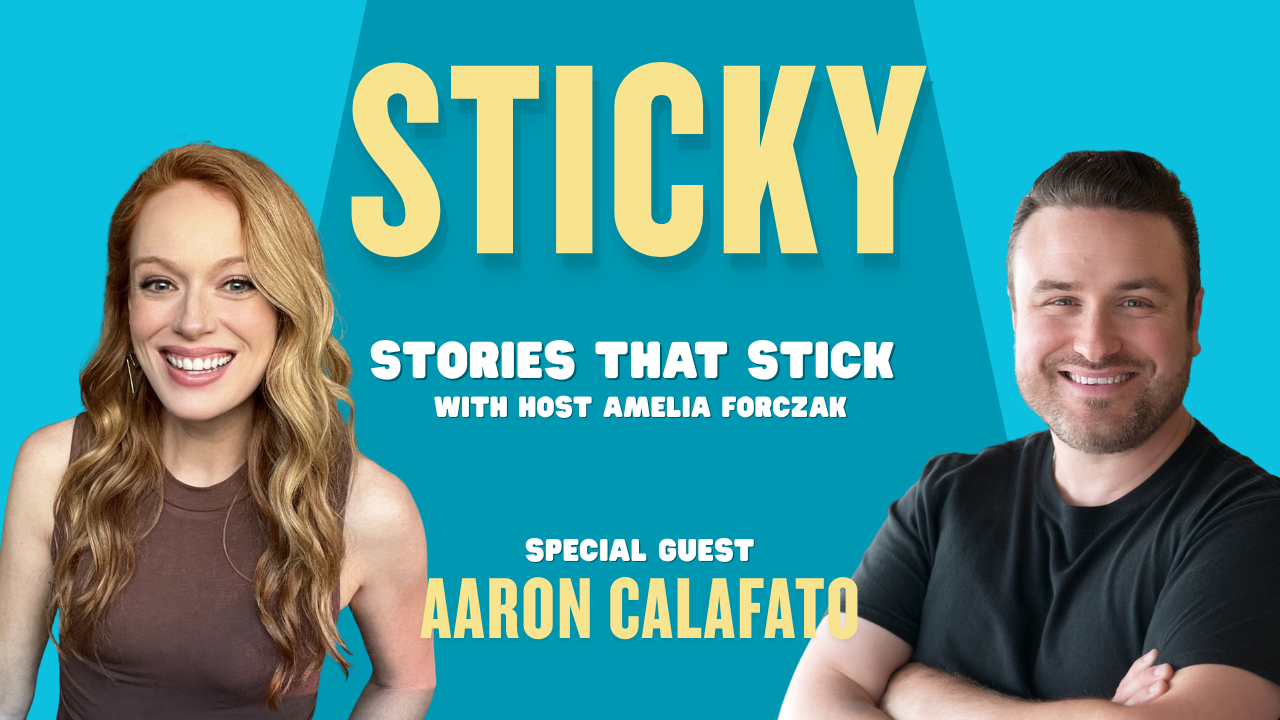
The Real Authority Is Vulnerability: Aaron Calafato on Authentic Storytelling



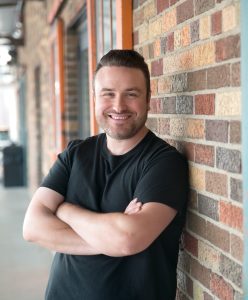
Aaron Calafato
Aaron Calafato is a storytelling expert and narrative strategist who helps major brands like Indeed, Glassdoor, and CyberArk build story-driven content channels that foster community, strengthen trust, and fuel growth. He is the creator and host of 7 Minute Stories, the leading short-form autobiographical storytelling podcast in the world, reaching over 30 million listeners through weekly unscripted personal narratives. With a background in theater and live monologue performance spanning over 150 shows across 20 states, Aaron developed his signature extemporaneous style — often compared to monologists Spalding Gray and radio legend Jean Shepherd. He also serves as an in-demand storytelling coach for C-suite executives and podcast consultant for some of the fastest-growing companies in the world. Aaron is driven by a belief that the shortest distance between two souls is a story, and he has built an entire career proving it.
Here’s a glimpse of what you’ll learn:
- [00:01:30] How Aaron discovered his natural seven-minute storytelling rhythm inside his hour-long touring monologues
- [00:04:00] The storytellers who shaped Aaron’s voice — from Spalding Gray to Jean Shepherd to Garrison Keillor
- [00:06:30] Why every great storyteller must first become a story catcher
- [00:09:30] How storytelling has been “industrialized out of us” — and how to turn your narrative awareness back on
- [00:12:30] The neuroscience behind why humans are wired for narrative, featuring story scientist Angus Fletcher
- [00:14:00] Why cause and effect is the fundamental infrastructure of every story
- [00:16:00] The difference between transactional and authentic connection — and why stories are the bridge
- [00:21:00] Why vulnerability is the real authority — and how that principle transforms how executives and brands communicate
- [00:25:00] How to help big companies tell human stories while staying brand safe
- [00:29:00] The difference between public storytelling and oversharing — and why great storytellers carefully curate, not expose
In this episode…
What makes someone genuinely trustworthy in front of an audience — whether they’re onstage, in a boardroom, or writing a book? Is it credentials, polish, or a perfect script? Or is the real source of authority something most professionals are trained to avoid?
Aaron Calafato has spent his career answering that question through storytelling. After years of touring the country with hour-long unscripted monologues and building one of the world’s most-listened-to short-form storytelling podcasts, Aaron has developed a clear philosophy: the shortest distance between two souls is a story, and the only way to truly earn trust is through vulnerability. He shares how his Italian-American family dinner table first taught him the power of narrative, how acting training sharpened his story-catching instincts, and why he believes human beings are already storytellers — we’ve simply been conditioned to forget it. He also makes the case that authentic storytelling doesn’t mean exposing everything. The best storytellers carefully curate what they share, honoring both their audience and their own privacy.
In this episode of Sticky: Stories That Stick, Amelia Forczak sits down with Aaron Calafato to explore what it really means to tell an authentic story. They discuss the neuroscience of narrative, the difference between transactional and authentic connection, and why the executives who struggle most with storytelling are often the ones who’ve been PR-trained into silence. Aaron also shares the philosophy behind his weekly 7 Minute Stories podcast and why he believes leaving people with a perspective — not an answer — is the highest thing a storyteller can do.
Resources mentioned in this episode:
- Aaron Calafato on LinkedIn – linkedin.com/in/aaroncalafato
- 7 Minute Stories Podcast – 7minutestoriespod.com
- Aaron Calafato’s Website – aaroncalafato.com
- Angus Fletcher, Story Scientist – Ohio State University (mentioned in episode)
- FOR PROFIT Monologue by Aaron Calafato
- Pithy Wordsmithery – pithywordsmithery.com
Quotable moments from this episode:
- “The real authority is vulnerability. That’s how people trust you. It’s kind of the other edge of authority, which is trust. And generally, the trust happens when you give something.”
- “The shortest distance between two souls is usually a story. The way that you can circumvent all of the layers and all the bullshit and all the titles and all the stuff is with a story.”
- “Before you’re a storyteller, you gotta be a story catcher. Because one thing with mining is the deeper you have to go, the longer it takes.”
- “We are storytelling animals. A dream or an aspiration begins with a story that you tell yourself. We as human beings have a forecasting ability, and that forecasting ability allows us to see things that aren’t there.”
- “Telling a story publicly means you’re curating the story you decide to share. I tell stories about my own life every single week, but 90% of my life is private. It’s a difference between reality television and being a storyteller.”
Transcript
Amelia Forczak: [00:00:00] Welcome to Sticky: Stories That Stick. I’m your host, Amelia Forczak. If you’re interested in storytelling or you just wanna hear some good stories, you’re in the right spot. Today, I have a very interesting guest with us. But first, I just have to let you know that this episode is brought to you by Pithy Wordsmithery, a boutique firm founded by yours truly.
I’m a New York Times bestselling ghostwriter, and I love helping people write and publish their books. If you’ve ever thought about writing a book, check us out online at pithywordsmithery.com.
Today, I have Aaron Calafato with us. Aaron is a storytelling expert and podcast strategist who helps brands like Indeed, Glassdoor, and Cyber-Ark build story channels that create community, strengthen trust, and fuel growth. He is the creator and host of Seven Minute Stories, the leading short form autobiographical storytelling podcast in the world, reaching over 30 million listeners through weekly unscripted personal narratives.
Aaron, thank you so much for joining us.
Aaron Calafato: Amelia, thanks for having me. Appreciate it.
Amelia Forczak: So [00:01:00] you have a crazy big podcast, and you’re on my new little podcast, so thank you so much for joining. We always talk about storytelling, and that is your expertise, especially within the niche of Seven Minute Stories. So I’m super curious to hear about how you landed on that and how you got started.
Aaron Calafato: Yeah, so it actually came from, I was touring around the country for about three years and I was doing hour-long monologues. And, they weren’t necessarily timed an hour, but usually you do, like, an hour show or hour of, of material. And I had been traveling and started off doing, always doing extemporaneous stories.
So even the monologues I was telling, they were outlined, and I’m sure you know as a writer there’s kinda like, I have the outline of the general where I’m starting, where I’m going, what’s the conflict, and how do I end, and what’s the change? So I had that general concept in my brain, but any time I would tell stories from the time I was a kid all the way through when I was training as an actor in New York, all the way through when I found out I was a better storyteller than I was an actor, and then when I hit the road [00:02:00] with monologues I always felt comfortable without a net.
So in fact, if you put a script in front of me right now, if I had to do what you just did with a script, I would… it would’ve taken me an hour. Even now with my podcast, if I ever have to read out certain things, whether it’s a presenting sponsor or I’m talking about a guest, I won’t do it live. Like, if w- as you as a guest on my show, I will do the intro separate Because it takes me so freaking long-
Amelia Forczak: Aw.
Aaron Calafato: To r- because, because I don’t feel comfortable on script. Mm. Where I feel comfortable is the script is kinda playing in my brain, and I’m able to filter it through and just speak clearly in the way that I’m speaking to you right now. So it really started analyzing those performances, and I would watch tape and listen to audio, ’cause I’m kinda competitive, and I remember always wondering, how can I improve this?
How can I… And you know, when you… It’s like going through your draft, and I would do a performance and I’m going, “Well, what part could I have shifted [00:03:00] here? Where could I have taken the pace up? Where could I have done this?” And what I noticed was within the hour-long monologue, I would have little seven-minute vignettes throughout the whole thing.
So the hour of monologue was essentially just a series of short stories that were connected. That’s it.
Amelia Forczak: That’s so interesting. Okay, so wait, let’s back up a little bit. So- Yeah … an hour-long monologue. So this is not exact- this is not stand-up. You’re not telling jokes. It’s not exactly a keynote, ’cause it’s not a corporate audience.
It’s just, like, for fun, you’re, you are entertaining an audience for an hour.
Aaron Calafato: For an hour, yeah. So what’s interesting is there’s a few storytellers in this space, because when I was in New York and I found I had this skill set I know I wasn’t a stand-up comedian because, one, being a stand-up comedian, I could never do it.
Because think about it, the expectation for the audience is that you gotta make ’em laugh.
Amelia Forczak: Yeah.
Aaron Calafato: What a nightmare. I could never do it. But when you’re a storyteller, [00:04:00] if you make them laugh, it’s a surprise. So a lot of my stories are humorous, but I have the freedom to go in saying, “Hey, I’m gonna take you on a journey.”
There’s some folks you probably know about, like John Leguizamo, that started off with, as a storyteller, as a, as a monologuist. And then you have great storytellers like Jean Shepherd that started off in the radio in the ’60s and ’70s, and then you have Garrison Keillor back in the day, uh, doing public radio.
And then more contemporary, you have a guy named Spalding Gray, and Spalding Gray came out a Well, he’s from the New England area, but he came out of the Performing Arts garage in New York City, and he would sit at a table, and he just had a couple of notes, and he would just tell a story for an hour, hour and a half.
So these are folks that I modeled my storytelling after. And then when I took it on the road, uh, I had one monologue that hit nationally called For Profit, and it was about the idea of student debt in America and the type of impact it made across a, a family, and states, and [00:05:00] lives. So it was an apolitical piece.
It was really a piece about economics, and it was a piece about, you know, kitchen table economics and what it’s like to be in the world where a college degree costs t- a quarter of a million dollars in some cases at private universities. And at the same time, why education is now more than ever more important, but can we afford that cost?
So it took on some really controversial topics, but I just would go and tell stories for an hour, and it became a monologue called For Profit. That was the title of it. So when I toured, that was the one I was looking at. That was- Mm-hmm … the one I was analyzing. And what I found was, within that hour-long monologue, it was just little vignettes, and they all clocked in at six minutes and 58 seconds, seven minutes and two seconds, seven minutes and 15 seconds.
Wow. How coincidental. So that was the first iteration of, like, yeah, maybe I just naturally tell stories in seven minutes, and that’s kinda where the idea came from.
Amelia Forczak: Okay. And it, it’s also, like, all these stories have been tested with [00:06:00] live audiences, where you’re looking into their faces, you’re seeing their engagement, you’re seeing what they like, and so you really, y- you really put in a lot of hard work t- honing your craft.
Aaron Calafato: A- and especially in the live setting, yes. And the thing that, the reason for the emergence of the podcast was actually the limitation of doing one show for three years. So I would have these little stories, right? But even an hour, I’m like, “Man, I got so many other stories that I’ve caught through my whole life.”
‘Cause I always tell m- my clients and folks I work with, before you’re a storyteller, you gotta be a story catcher. And even if you’re writing one novel, as you know, you have to have a lot of different story ideas floating around, and you don’t just grab ’em in the air in the moment before you write. You usually turn on an awareness or you have an affinity for narrative.
You see the world in stories. And so I think my acting training turned that vehicle on, where I became sort of aware. [00:07:00] And I came from a family of storytellers, Italian-American family, where at the dinner table it was about who could tell the story, and who could make everybody laugh, and who could make everybody cry.
And so as a kid, I watched my father and my grandfather were incredible storytellers and did that in their vocations, and I wanted a seat at the table because I saw what it meant to, to that moment, and to the people, and to the culture, and to memories and all that stuff. So, so yeah, it, it started there, but it really turned into what you said, which is an accumulation of stories over time.
And once I got to test them out in that live setting, I’m thinking, “Well, I don’t wanna just have it- get contained to one show. What if I just turned on the pipe and, like, let these stories out until the wheels come off?” And that’s still going, and I just have, they just keep adding as you, knock on wood and you thank God as you keep living you can keep catching stories.
And I just do it from an autobiographical point of view. That’s the other thing, is that I tend to see the [00:08:00] world not through a selfish prism, but only through my prism can I really understand or attempt to understand people outside of myself. And I, I’m envious of a lot of great writers who can portray characters outside of themselves, even if it’s, you know, manifesting from themselves.
That’s a beautiful skill set. My only way in to the outside world was actually through how I see it and then sort of presenting that perspective.
Amelia Forczak: Yeah. I think that’s what a lot of authors are doing in, in their books. I usually work with people who are executives, entrepreneurs, professional speakers, and they, they want storytelling to be part of their book so it shows their experience and, makes them present in- Mm
in the manuscript. Sometimes we, we’re telling case studies or other stories, but a lot of times we’re, we’re trying to dig deep and figure out what stories fit certain points that we’re trying to make, and that can be tricky for people, right? It’s like stor- story mining, and they have to go back and really think about, like, what are the [00:09:00] best-
What are the best examples to put here? And I do find that people who do a lot of keynote speaking are usually a little more prepared for figuring out what stories people wanna hear and what can go in the book.
Aaron Calafato: It’s interesting you said story mining. It’s, we’re in a, we’re in a similar space where there’s the story catching and the story mining, and if you do both of those things, you’re in business.
Because one thing with mining is the deeper you have to go, the longer it takes. So if you are living through your life, and I always advocate this f- just because I’m an evangelist of storytelling as a form of art, as a cultural form that I think has kind of got industrialized out of us. And that’s not pointing a finger, it’s just what it is.
It’s just that through school, through a long time, through our, our system, the idea of ones and zeros, the idea of logistics and accounting, and all these things are important, but it’s missing this other part of the humanities which is all part of one ecosystem. And so I think what [00:10:00] happens is you go through a life a lot of folks go through when they are actually born as we are storytelling animals.
And i- if you’re not practicing it or if you’re not honoring it or thinking about it as a high form of, of not only art but a way that we communicate and something that just e- enriches your own life, you can kind of bypass it and kind of just go through looking at life going, “Yeah, that thing happened, that thing happened.”
But even just by turning that awareness on and going- What does that look like t- as a story? What does it mean to me? What is the art there? Mm-hmm. What is that person like? And just turning that on, like I did when I was in acting school, hearing the stories about, you know, Dustin Hoffman sitting on the train and, like, studying characters.
You then, all of a sudden it’s like this whole world opens up to you. And, I think it’s one of the… I, I saw you in an interview talking about how it’s not that it’s not difficult, but when you really think about it, because we are naturally attuned, you can write a book, right? Like, you can write a [00:11:00] story.
And, and it doesn’t mean that it doesn’t take skill refinement and practice, but it’s not as far away from people as so many people think. Oh, yeah. And I think specifically storytelling as well. We do it all the time. Yeah. It’s just funny, when the camera’s on, when the light’s on, when the red light’s on, the recording audio, or you’re at doing that keynote, all of a sudden you become a different person than you are talking to your friend at 2:00 AM in the morning when they need help.
Amelia Forczak: Yeah. The, it’s sort of similar with writing. I know that you had said that you, you feel like you’re not a writer, but people have said, “Wait, hold on a second. You are a writer because you’re coming up with a story. You’re just telling it in a different way.”
Aaron Calafato: Yeah.
Amelia Forczak: And that’s why just thinking about this podcast and creating it, it’s not a podcast on writing, it’s a podcast on storytelling, because that’s the heart of it, right?
We’re all storytellers, and I love earlier that you said that we’re storytelling animals. I love that. Like- Mm-hmm … how do we tap back into that? Because it, you’re right that it is this, like, art that’s been with us from the beginning of time, and it’s [00:12:00] something that we all, like, innately have. So how do we, how do we get better at catching the stories?
Aaron Calafato: I think it’s actually just doing the thing we do naturally, but sometimes we forget. So I was talking to, uh, a story scientist. His name’s Angus Fletcher,
Amelia Forczak: and
Aaron Calafato: you should chat with-
Amelia Forczak: I love that that’s a job also.
Aaron Calafato: It’s amazing. So he started off, I think he, I know he’s at the Ohio State University now, but he also did some of his research in Michigan.
And he’s, comes from a neuroscience background, but he’s also a great storyteller, and what, what he does as a story scientist, he tries to help connect the dots between the, the neurons the brain and why it’s wired a- a- a, through humans in a narrative way. And I had him on one of my bonus series, the same series you’re gonna be on, and he talked about the through the evolution of the human being, that it essentially emerged as really a problem-solving tool.
Amelia Forczak: Mm.
Aaron Calafato: So if you ask the question, how can we [00:13:00] become better storytellers? I would ask, do you ever try to solve a problem during the day? And if you really think about if you try to solve a problem during the day, let’s go one step deeper. When you solve that problem What is happening in your brain? A- and if you go one layer deeper, what you’ll probably find is you start telling a story, meaning even if it’s just beginning, middle, and end, or if I do this, then this will happen.
So actually, the cause and effect phenomenon is really the birthplace of story. Because if it’s a cause without an effect, it’s static. If it’s an effect without a cause, it’s not really an effect, it’s just static. But once you have an, a sequence of events where something emerges, it causes a change, and that change causes another change, and so on and so forth, that’s actually the infrastructure of a story.
And then on top of that, just ask yourself, how does that make me feel? And usually right there, those are your ingredients. So to ask how do [00:14:00] we become better storytellers, I would just say look at what you’re already doing, and don’t look at it as just a thing that’s ones and zeros, or I’m just trying to plan my day.
You’re actually telling yourself stories. Think about when you want to do something or start a career or have a dream or an aspiration. A dream or an aspiration begins with a story that you tell yourself. In fact, usually most of us see the end of the story. We’re there on the stage. I’d like to thank everybody for this award, right?
We see ourselves in that moment, or maybe we wanna have, a family one day. We see ourselves on the beach with our family. We see these things even when they’re not there. We as human beings have a forecasting ability, and that forecasting ability allows us to see things that aren’t there, see things in the future, see a story that we could potentially live and fulfill, and at times tell negative stories that aren’t true about ourselves.
I’m not good enough. I’m not really a writer. Ah, I’m not sure if I can make this thing work, when in fact you might be able to. So we’re filled [00:15:00] with stories already, and we’re already using them when we’re trying to solve the simplest problems in the world. So I would just say it’s as easy as just thinking about that, meditating and examining what kind of problems am I trying to solve, and what kind of stories am I actually telling myself?
And right there you’ll realize you’re already a storyteller at heart.
Amelia Forczak: So you developed this podcast where you’re telling seven-minute stories on just, like, all kinds of random things. Are you trying to leave people with, a certain emotion or a certain information? Is it, like, a teaching kind of story, tell me more about that.
Aaron Calafato: It’s interesting you talk about intention. I know the intention initially is where it’s always been, which is I’m not good at a lot of things. I’m tr- tremendously terrible at a lot of things. You can ask my kids and my wife- … my whole family and everybody. But what I have found that I love and that I seem to be pretty good at is being able to connect with people in a really authentic [00:16:00] way So to your question, it goes to the heart of something that I really value, which is authentic connection.
So I think we have, and we all know this, we experience two types. There’s a lot more, but I’m not that learned to de- describe it this way, so I’ll keep it simple for my own brain. There’s two types of connections we have. We have a transactional connection, and we have an authentic connection. And generally, if you can imagine a transactional connection, oftentimes it’s at a cash register or when you’re running to go to the bank and you’re doing these things.
And think of it like a Venn diagram. Sometimes the transactional contains authenticity, and sometimes the authenticity also contains transactions. But for the most part, these are two separate things. It’s the same reason why when the interview for the job ends and the camera goes off, we go, “Ah.” We’re removing the mask.
Amelia Forczak: Mm.
Aaron Calafato: We’re taking off the performance. We’re taking off… And it’s not that there wasn’t some real part of you, [00:17:00] but is it the same part that’s alone at 2:00 AM when things aren’t going great? Are you bringing that part to LinkedIn? And if you are, is it real or is it performative? So when we ask ourselves about authenticity in transactions, for me, I’ve always found value in being as authentic and connected with people as I can, because it felt true.
So this is just a feeling thing I’m talking about. It always felt true, and I wanted to be in that place as often as possible. And I always felt that great stories, great movies, great art, great writers, the the wonderful narratives that have been told throughout time and through different mediums, I felt so connected and real with interacting with those, where I did not feel that way during a PowerPoint presentation or when I’m doing my taxes.
And there’s nothing wrong with those things. What I’m saying is, I didn’t feel a sense of transcendence as a human or [00:18:00] spiritually, whatever you wanna say, in those moments. So I just wanted to be in the authentic space all the time. And what I realized in my view was that the shortest distance between two souls is usually a story.
The way that you can circumvent all of the layers and all the bullshit and all the titles and all the stuff is with a story. And it… And you know this. It goes right to the soul. That’s why musicians and writers have such a following. It’s not just the celebrity of the known artist, it’s actually the connection point with the story they told.
Because we’re not just interacting face to face going through the mess of who we are. We’re actually connecting through those stories a piece of ourselves that is so authentic, it’s sacred And you’re serving that up to other folks, and they’re letting you in. It’s a transaction in that way, and that’s a beautiful thing.
So I think that’s where it started, and I wanted to be in that space all the time, and the way that [00:19:00] I knew how to do it was to tell stories. But the ending of the stories to your, the second part of your question, was only to leave folks, one, better than I found them, a- and also leave them with a perspective, not an answer.
So my stories tend to have a reflective moment at the end or a Aesop’s Fable lesson, but it’s not always spelled out. But I learn and live and tell stories that way, which is, hey, I’m usually the jester. I’m the fool. Like, these things happen to me all the time. It’s not that I know. In fact, my stories usually start with, “I have no idea what’s going on.”
Or I come in with a hubris where I go, “I know what’s happening,” and by the end of the story, I have no idea. So I try to take people into those points of my life, which is searching with intention, searching with integrity, trying to live a normal life in Ohio, and at the same time encountering some extraordinary things that we all- Yeah
experience, which is that universal thing. So I think that’s why, and that’s the only thing I’m [00:20:00] looking to gain, is for someone to listen to it and go, “Wait a second, there isn’t someone here trying to pull me over to put my credit card in the thing,” or, “There isn’t someone here who’s trying, their end game is to se-” That’s great.
For me, I received the gift of story growing up and always, and this is my way of giving it back, and if people feel that connection, I know they do with my audience, then that’s it, and I just wanna keep multiplying it.
Amelia Forczak: Yeah. So what you said about authenticity, about how a, a lot of times you’re coming into a situation, the story starts, you’re coming to a situation and you’re like, “Wait, what’s going on?”
Or you think you know what’s going on, and that’s not it. That I think is really interesting because a lot of times, at least for books, authors always think they need to be the authority, where they’re like, “I knew exactly how to do this,” or, “Here’s exactly what I did right,” and that’s not what people wanna hear.
They wanna hear the moments where you learn how to do it, or you’re still learning how to do it, or where you mess something up, and then how [00:21:00] you’re thinking about it differently, how you reflected on it. And sometimes when I’m coaching authors, that part is, like, very difficult to dig deep because people aren’t used to being that vulnerable.
Aaron Calafato: Well, it’s funny you said that because I was gonna say, and I thought you were leading to it, the real authority is vulnerability.
Amelia Forczak: Right, ’cause
Aaron Calafato: that’s how people trust you. And it’s
Amelia Forczak: a different type of
Aaron Calafato: a… For sure, right? It’s, it… That’s it. The real authority, and it’s not authority in terms of the authoritative thing we’re thinking about, but it really, it’s kind of the other edge of authority, which is trust.
And generally, the trust happens when you give something Because it’s like, a- and this happens in, I know there’s a lot of folks out there who know how to, teach sales and relationships and what, and I, I naturally find myself with, with just like you do in the, in the selling space just because I’m selling s- the consulting services of narrative strategy and podcast strategies to companies and stuff.
And when I’m in those spaces talking to [00:22:00] CMOs or whatever, the first thing I’m trying to do is, one, connect with them first. Like, “Hey, you- you’re a person, I’m a person.” And generally, I don’t wanna say, “Hey, I don’t know what I’m doing,” but I do wanna give something. So whether it’s in a conversation at work, or whether you’re in an interview, or you’re making a pitch, or you’re trying to convince your significant other of something, one of the things I’ve learned is to not come in as authority, this is how it’s going to be.
Usually it’s I’m authoritative and I’m confident because my intentions are true. I want to do right. I want to make good. So I’m not an unreliable narrator, I’m just a human narrator, which is I’m trying to do these things and this is what I thought, but guess what? That’s not how it worked out, but here’s how I’m gonna go forward, and maybe this is how you can learn from that, too.
And so I think that’s the real vulnerability, because as soon as someone sees you show their cards, they’re more apt to, to drop [00:23:00] in, too. Um- Mm-hmm … as opposed to always being like this, and that’s when it’s always, that’s when you get those Zoom meetings, “Hello, how are you?” “Great.” “I’m good. How are you?” “F- I’m fantastic.”
We’re reading the- It’s like we’re not- Yeah … really being human here. So, yeah, it’s vulnerability. You’re absolutely right. It’s a great point. That’s a great point.
Amelia Forczak: And what you just explained I think has been so difficult for big companies to get right. And, and- 100% … I’m seeing, I’m seeing that get a little bit better.
But for a while it was like how do big companies even try to be vulnerable? How do they even, like, try to seem like a human or bring that element out? And so that’s what you’re- Totally … ultimately working with a lot of these big brands on, right?
Aaron Calafato: Well, I think what you will experience as well, and you’ve had the success in terms of your writing and ghostwriting and, and being a, a partner with other great minds.
The hardest part is just getting someone to believe in what you’re saying. And I’ve found, too, that early on in my career I spent a lot of time out, and I mean more in the consulting space. ‘Cause the storytelling [00:24:00] stuff, that, that’s the art, that’s the fun stuff. But when you’re trying to align your storytelling skills with another person, and this is where I have a lot of admiration for what you do, even, you know, it’s still on an individual level.
I have learned a lot in the last five years about coming into meetings and just trying to understand how they think about things and not necessarily come in with my, like, “This is how you tell a story, buddy.” You know, I don’t, I try not to do that, even though I might know what the template is, even though I might have the experience, even though I might have the credentials Ultimately, they have to believe that is something that they are willing to do, and usually it happens on a committee level in these companies, which is you have your, your president or your CEO, or you have a board of directors, right?
And they have a, the- everyone’s driving towards the success of this company. Define that however you want. And ultimately, when it’s in systems, success and vulnerability don’t usually go hand-in-hand. But when it’s in the… when it’s personified in a story, it is, [00:25:00] and that’s when they get it right. They get it right when they partner with great storytellers who can really just reveal the good thing that they’re doing.
But I think what happens, and you know, a lot of companies double down on sort of the authority part or the sort of the im- we’re perfect part. Or like, don’t talk about imperfections because that’s a liability. I get that, but there’s still ways to do it while still being brand safe, and that’s when consumers or customers, whoever your constituency you’re trying to reach, that’s when they’ll lean in and go, “I got that.
I can understand that.” That’s,
Amelia Forczak: that’s so interesting you say that ’cause a lot of times when I get executives who have worked at really big companies for a long time, and they’ve been PR trained, and they understand what they should say, shouldn’t say, they’re, it’s especially difficult for them to pull the personal stories for their book where they’re vulnerable because they’ve been trained to not be.
Aaron Calafato: Isn’t that weird, though?
Amelia Forczak: Yeah. It,
Aaron Calafato: [00:26:00] it- I mean, I, it’s, I mean, it’s a weird phenomenon. Without judgment, it’s just a weird thing, and I totally can relate and have empathy for that experience because if you are on that executive level, there’s so much riding on what you’re doing. You know, I, I would say I had a different point of view of executives when I was growing up in, you know, a blue collar part of town, and I still have viewpoints about the dignity of, of work, and the worker, and the whole ecosystem of the market, uh, economy.
But I would say I’ve, I’ve been challenged the stereotypes I’ve had, ’cause there’s always bad actors, but there’s a lot of great leaders, and executives, and builders, and CEOs who are so well-intentioned and so good. And to your point, th- it just is difficult when you have so many stakeholders weighing in on what you do and so many lives and livelihood.
That, that is a big risk, so you’re right. Look, telling… This is a great point. Telling a story is not without risk. [00:27:00] This is important, and that goes for the executive, that goes for the person who just is maybe sharing something for the first time at the dinner table when they’re usually the one listening.
It’s the same continuum, just a different experience. It is not without risk of someone going, “Ah, I don’t believe it,” or, “No, that wasn’t that good,” or, “I don’t relate to it.” But man, when you do it and you practice it more and more- The value proposition is so high that you won’t wanna stop telling stories.
Because ultimately you’ll live with the risk of some folks not jumping on board or some people not really getting it, because most people want to connect that way. And when you do, you’ll at least get them to lean in. You don’t have to be a professional storyteller. You’re just sharing a part of you with them, and that, that’s a beautiful thing.
Amelia Forczak: Yeah. I think if you’re not putting yourself out there like that and not sharing something where someone could feel a certain way about it, it might be just, like, a boring [00:28:00] story, right?
Aaron Calafato: That’s right. Yeah. And can I say one thing? I, I know we’re… I want… You, you’re, you’ve made me think about this, which is great.
Sometimes when we say stuff, and I’ve been saying it, like, tell your story or, like, put yourself out there, th- because of the current landscape we’re in with, social media being And I think it’s, we’re moving away from it i- in terms of, I think w- a lot of companies and people they treated social media as the destination instead of a marketing apparatus, which it really is a marketing apparatus, right?
I mean, it’s, it c- it can be a great way to catch attention, but ultimately, you want people in that book, e-book or real. You want people on that podcast. You want people… You want… We are all seeking that one-to-one connectivity. That’s why in every, clickable URL link in everybody’s YouTube, it’s usually to their site, because they’re trying to take that attention and they’re trying to cipher it, not just to have it.
They want to have a one-to-one. And what’s the basis of a [00:29:00] story? It starts with one person telling another person a story. So they’re looking for storytelling infrastructure, and one of the problems, I would say, with the social media atmosphere is it’s not a one-to-one experience. It can be, but the problem is after that, then a new thing comes up, then a new thing dings, then another thing goes here, then the algorithm…
So it becomes this sort of confusing space of ideas, and that’s great, but I think ultimately, sometimes people who want to tell stories are fearful that, “Oh, do I have to put all the stuff of my life out there?” I would tell you, and you know this, telling a story publicly means you’re curating the story you decide to share.
I tell stories about my own life every single week, but I, 90% of my life is private. I’m not… It’s, it’s a different between sort of like open-ended cameras and reality television, so where you’re in an exploitive nature, just turning a camera on and showing people the intimate spaces of your life.
It’s the opposite. Usually, as a storyteller, a great author, [00:30:00] and especially as an autobiographical storyteller, I’m carefully curating real stories, but I’m also honoring the privacy that you have to have as well to work as an artist. So I just wanted to say that, too. If there’s people who are like, I don’t know, like an executive or someone who’s like, “I want to write this book,” no, you can, to a certain degree, control the narrative, but not in that PR sense.
You just put out what you want to put out and shape it, because ultimately, it’s an insight into who you are. It’s not necessarily like a camera into every facet of your life. So I just wanted to comment on that.
Amelia Forczak: Yeah. That’s a great point. You can still figure out what feels on brand, what resonates with your target market, and tell real authentic stories.
It’s not about, like, digging all the skeletons out of your closet- That’s right … or sharing your political views or any, you know- That’s right … anything that doesn’t make sense for your situation. Amazing. Totally
Aaron Calafato: agree.
Amelia Forczak: I am excited to listen to more episodes of your podcast. Tell us, if people want to learn more about you, [00:31:00] where can they go to stay connected with you?
Aaron Calafato: The best place to go is 7minute storiespod.com It’s the number 7minutestoriespod.com. And when you go there, you’ll find all the different ways to follow because, as you know, there’s 100 different podcast apps. So whether you’re an Apple user or you’re someone who actually just likes to listen to, episodes online, you go to a website, or there’s a newsletter option, there’s Castbox and Pandora, the whole thing.
So just go to that one website and you’ll find a way to, to follow the stories. And to your point, you know, I tell a new seven-minute story every week, and they’re a gift. I, I don’t do… There’s no advertisements on the in between the stories. But I also have a series, a bonus series that you’re gonna be on here, which I’m excited about, that I run, uh, once a month called The Storytelling University, where I get to kinda stop being the storyteller for a little bit and then talk to great storytellers and learn from them.
So not just for the stories on Thursdays, but also for these new emerging bonus series as well. I think people will really get it. And I got… Someone dropped a comment this morning on Apple and they [00:32:00] said, I don’t know who it is, but they were saying, “Hey, I, I love listening to Aaron’s stories. He helps me reset for my day.”
And I thought that was, like, a really great compliment, not to be egoic. Yeah. But that’s, that’s the kinda thing where it’s like, yeah, man, like, that’s what I hope. You know, everyone’s got their thing. Some people are there to make you angry. Some people are there, that’s their s- their, that’s their thing, or some people are there to make you sort of inquisitive.
Is it… I think the role I’m trying to play is just giving a perspective and leaving you better than you found it, uh, especially kind of in a, in a world that’s really messy and hard to navigate now.
Amelia Forczak: Yeah. Everyone loves a good story, and my kid used to tell me, “Tell me a story. Tell me a story.” And I’m like, “Oh my God, I feel fully mined for stories at this point.”
But yeah, people always want stories. And so, if there’s anyone out there listening who wants to become a better speaker or wants to transition into writing books, studying good storytellers helps. And I think that seven-minute arc that you have is a really comfortable amount of time, especially for, like, a [00:33:00] keynote speaker- Mm-hmm
for figuring out which stories can really help move the narrative along. And a lot of times we tell a shorter version in the book. So check out Seven Minute Stories. And again, thank you so much for being on the podcast. Thanks for everyone who’s listening. I’m Amelia Forczak, the founder of Pithy Wordsmithery, and you’re listening to Sticky Stories That Stick.
Don’t forget to hit the subscribe button, and we’ll see you next time.
Never miss a story that sticks
Subscribe to Sticky: Stories That Stick on Apple Podcasts, Spotify, or Amazon Music so every new conversation lands the moment it drops.