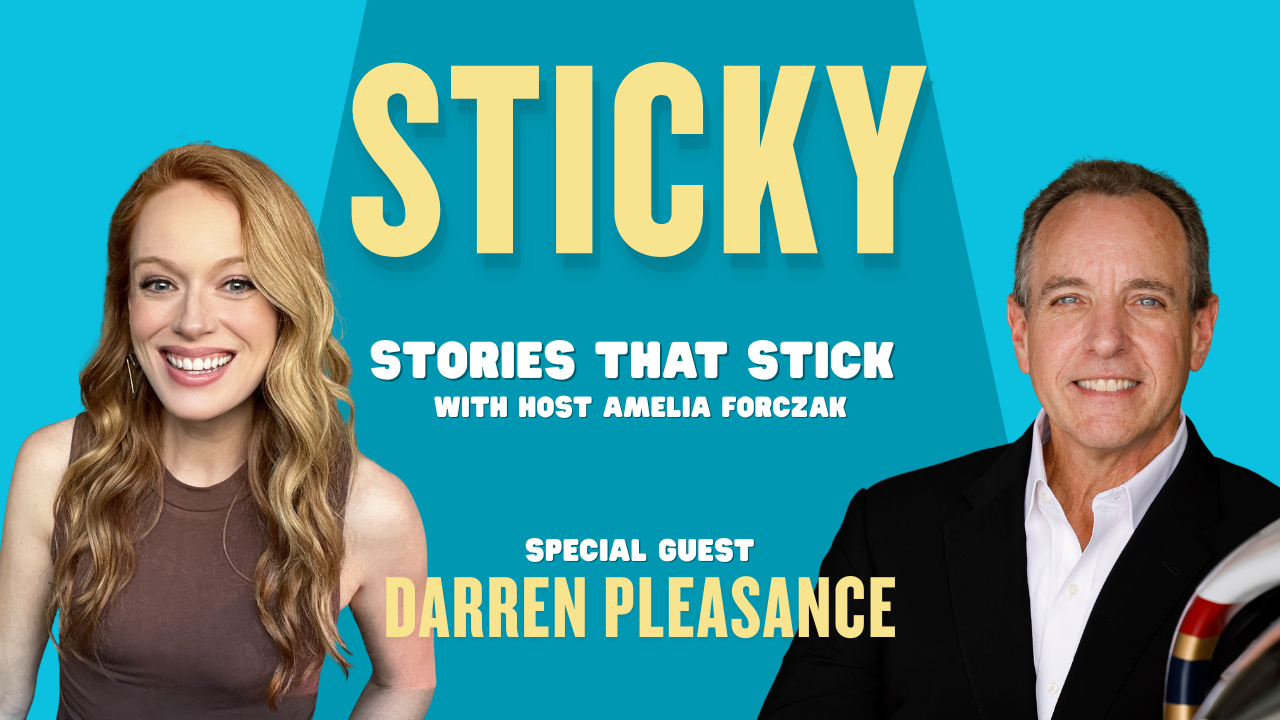




Darren Pleasance
Darren Pleasance is the President and CEO of the Aircraft Owners and Pilots Association (AOPA), the world’s largest aviation membership organization, which advocates for and supports pilots and aviation enthusiasts around the globe. Under his leadership, AOPA represents hundreds of thousands of members and over 80 international affiliates, and Darren is also a recognized author and speaker, having released his 2024 book, True North: A Handbook for Inspired Living. Darren’s own journey is remarkable: he has flown private jets for celebrities, landed planes on Alaskan glaciers, worked for leading organizations like Nike and Google, and, alongside his wife Lisa, runs a horse farm in central Oregon. Passionate about inspiring others to live fulfilling and intentional lives, Darren brings unique insights from both the cockpit and the boardroom to conversations about personal growth, career pivots, and storytelling that truly sticks.
Here’s a glimpse of what you’ll learn:
- [0:20] How aviation became Darren Pleasance’s lifelong golden thread
- [4:26] Why passion leads to career success and fulfillment
- [5:56] How luck combines opportunity with preparedness in your journey
- [9:58] The secret to building a balanced and inspired weekly life
- [13:30] Why it’s never too late to reinvent your career and story
- [15:11] Choosing options that make for a better story
- [20:13] Why who you work with shapes your happiness and success
- [22:30] How leaning into strengths beats striving for perfection everywhere
- [31:33] Practical public speaking tips from a former introvert
- [40:49] The art of authentic, memorable storytelling with actionable advice
In this episode…
Feeling stuck in a professional rut, or wondering if it’s too late to chase your true passion, can leave you questioning everything. What does it look like to build a life around what actually lights you up, even if it means changing course multiple times? And how can you transform your personal journey into stories that inspire others to do the same?
Darren Pleasance shows exactly how he solved those dilemmas, weaving his love of aviation through a career that spans flying celebrities and landing planes on glaciers to executive roles at global companies like Google and McKinsey. He explains how discovering what excites you — and making it a non-negotiable part of your weekly routine — creates a virtuous cycle of energy and excellence. He shares frameworks from his book True North, such as auditing your 168 weekly hours to prioritize meaningful pursuits, and recounts pivotal moments when choosing “the option that makes for a better story” led to bold, fulfilling transitions. Darren delves into the power of intentional trade-offs, the importance of surrounding yourself with inspiring people, and how even midlife pivots can result in a more inspired, rewarding path.
In this episode of Sticky: Stories That Stick, Amelia Forczak talks with Darren Pleasance, President and CEO of Aircraft Owners and Pilots Association, about overcoming perfectionism, speaking up, and building a life that blends success with personal joy. They explore storytelling, balancing ambition with happiness, and making courageous choices that lead to “better stories.” Whether you’re starting fresh or seeking inspiration, this episode offers tools to help you chart your own true north.
Resources mentioned in this episode:
- Darren Pleasance on LinkedIn – https://www.linkedin.com/in/darren-pleasance-2ba42b1/
- Darren Pleasance website – https://darrenpleasance.com/
- Aircraft Owners and Pilots Association (AOPA) – https://www.aopa.org/
- Pithy Wordsmithery – https://wordsmithery.com
- AirVenture – https://www.eaa.org/airventure
- True North: A Handbook for Inspired Living by Darren Pleasance – https://www.amazon.com/True-North-Handbook-Inspired-Living/dp/B0CQ74BHNN
- Jim Weatherby on LinkedIn – https://www.linkedin.com/in/jimwetherbee/
Quotable moments:
- “If you’re lucky enough to find something that lights you up, you can do so much with that energy.”
- “Life is about choices. You can’t do everything, and you definitely can’t do everything equally well.”
- “When faced with a difficult decision, choose the one that makes for a better story.”
- “I’d rather be less wealthy and love getting up every day than having a lot of money in the bank and not enjoying what I’m doing.”
- “You can become really good at almost anything if you put enough hours into it, but what a shame if you don’t enjoy it.”
Action Steps:
- Audit how you spend your time each week: Track your weekly activities to identify neglected priorities and make intentional changes for better balance.
- Prioritize and protect time for your passions: Schedule regular time for energizing activities to keep your life fulfilling and aligned with what matters most.
- Choose the option that makes for a better story: Make courageous decisions that lead to growth and a more meaningful life narrative.
- Surround yourself with inspiring people: Build relationships with those who motivate and support you to sustain passion and open new opportunities.
- Embrace imperfection and give yourself permission to improve over time: Focus on progress and learning rather than perfection to encourage growth and fulfillment.
Transcript:
00:06
Hi. I’m Amelia Forczak, the host, of Sticky: Stories that stick, where I sit down with successful executives, entrepreneurs and thought leaders to uncover the pivotal moments that shape them and explore what transforms personal experiences into stories that truly stick with audiences. Whether you’re crafting your next keynote, writing a book, or simply want to connect more authentically with others. You’ll discover the psychology behind memorable storytelling and learn how to turn your own life experiences into narratives that resonate and inspire action. Today, I have a very exciting guest with me, but first, I just have to let you know that this episode is brought to you by Pithy Wordsmithery, a Chicago based boutique firm founded by yours truly. Amelia Forczak, I’m a New York Times bestselling ghostwriter, and love helping people write and publish their books. Since 2011 my team and I have helped many authors turn their stories into bestsellers and their brands into thought leadership platforms. Our readership is in the hundreds of thousands, so even if you haven’t heard of us, there’s a decent chance you’ve read something we’ve written. If you’ve ever thought about writing a book, check us out online at PithyWordsmithery.com
Today I have Darren Pleasance with me. Darren has lived an incredible life. He’s worked for some of the most influential companies in the world. He’s flown private jets for celebrities. He’s landed planes on glaciers in Alaska, and he and his wife Lisa, run a beautiful horse farm in central Oregon. Today, Darren is the CEO of the AOPA, the world’s largest aviation membership organization, and he’s the proud author of his 2024 book, true north, a handbook for inspired living, which I have right here. So, Darren, thank you so much for joining us.
Amelia, thank you for having me on your show. I appreciate it.
02:12
Just our experience going through the book. You have a ton of stories, and so I thought you’d be a great guest.
02:19
I appreciate it. Yeah, I’ve I’ve been fortunate. I’ve lived a very interesting life, and
02:29
It’s in one because you’ve had some interesting career transitions, and so you’ve done the corporate thing in a really cool way, like working at Nike and Google and other cool organizations. And you’ve also been a pilot professionally. So tell me about that journey.
02:29
How much does journalism? How much journalism goes into writing books like this?
02:30
02:47
Yeah, I mean, it really for me, the golden thread was aviation. I discovered at a very young age that I liked airplanes, even though I came from a family that didn’t have anything to do with general aviation. I discovered it mostly through model airplanes. I lived close enough to an airport at the town I grew up in, in Livermore, California, that allowed me to go out and try to proximity to airplanes. So that was really the kernel. And then from there became the first chapter of many chapters in my life. That first chapter was really getting my pilot’s license and becoming a flight instructor and teaching people to fly. There was a second chapter where I was flying cool, interesting types of airplanes, including, like you said, flying celebrities. I went up to Alaska, became a pilot. I flew corporate jets all over the country and into the Caribbean. And so that was my next chapter. That then led to my business chapter, which had me at a place called McKinsey and Company, and then Google, and then Cisco, and then now AOPA. And all the way through each of those chapters was somewhere between six and call it 14 years long, and each one built on the prior chapter, but each one was distinct in its own right. So to your point, it’s been a lot of lives in one and I’m happy with that. It’s actually been really fun to keep that diversity and entertainment going in my life and just keep me fired up and fueled up to take on whatever that next chapter is
04:02
04:03
04:04
04:05
amazing. I remember from your book just talking about how passion matters so much in life. And a lot of times, people sort of just keep coasting. They find something that works, and they just keep doing it, and they wake up, like 30 years later, and they’re still doing that thing, and they never got a chance to do all these other things that they were sort of interested and didn’t get to cultivate. Tell me about about that, because I know that’s one of your big teaching points when you when you talk to audiences,
04:31
04:32
it is, yeah, and again, I didn’t know what I was gonna light me up. And so I give a ton of credit to my parents, because they were willing to allow me to discover that and help me to discover it, but as I discovered it, it turned out, the thing that got me excited was not somebody themselves particularly excited about World of aviation. They didn’t know much about it, but I give them a lot of credit, that they saw in me a level of energy that was driving me forward, and I was picking up those magazines to read, and I was riding my bike five miles out to the airport under my own energy to go make these things happen. And this isn’t the benefit, boy, if you’re lucky enough to find something that lights you up, that gets you going, that has that passion, and you can do so much with that energy, because those who find something they love doing are likely to differentiate themselves relative to others and be better at those things than others, and you get this virtual cycle where you find something you like doing, you tend to do it more than the average person. If you do it more than the average person, you get better than the average person. If you get better at the average person, at pretty much anything, you can find a way to make that a big part of life. And so it does start with or you have to find something that really lights you up and gets you going. And again, for me, that was aviation, but it could be music, it could be writing books, it could be math, science, it could be anything. So it’s really about what is it for you that lights that fire and gets you
05:51
05:51
moving? I am so excited for you with this current job too, because your passion and then the like corporate came together.
06:01
It did. I mean that this kind of funny life has worked out this way. Maybe we’ll get into the thing about, you know, luck is really, as they say out there, right? Luck is when opportunity meets preparedness. And I feel super lucky because I’ve had all of these amazing jobs and sort of life opportunities come my way. But it wasn’t as though it was completely accidental, right? It wasn’t also completely prescribed. It wasn’t like I sat teenager and kind of mapped out this journey that I’ve been on. I didn’t have any clue how this would all turn out. But it wasn’t also true that it was just a complete random walk. There were intentional things I did along the way that created opportunities for me. I got good at things that I was passionate about. By being good at that, that created opportunity for me to go do the next thing. And as you said, but between all that aviation stuff I did, and then all of this really cool, interesting business stuff, between the management consulting, the stuff at Google, the stuff that Cisco Systems, this job that came my way. This opportunity was perfect for me, and I think I’m a good fit for the best mix of aviation and business. You need both of those to do this role, and had I not taken those prior steps, I obviously would not have been nearly as qualified a candidate for this. So you’re exactly right. It’s it’s this perfect confluence of everything that’s defined my life to this point?
07:21
Yeah, so are you guys listening? Darren, who is
07:33
listening, has been to that you’ll know it’s the biggest what is the biggest aviation event in in the world? How many people?
07:42
About 700,000 people over the course of the week.
07:46
It’s in Wisconsin, it’s crazy I’ve never seen anything like it. I went up with my daughter who was five at the time. And it turned into a core memory for her. She loved it so much. We went up and Darren has this golf cart that he drives around. And as soon as I got in the golf cart and he started driving, I was like, you’re a pilot. You’re a pilot! I forgot about that. You took off on that thing. I was like, oh my god, I can picture you like, up in the sky, just like zooming around.
My daughter loved it. She’s like, in the golf cart eating ice cream. Darren, she still talks about you.
That’s great!
She’s like, Darren? Darren?
08:30
Well, now you get a sense of why I love it so much, and I’m lucky that I found something so much, and I’ve been able to make it such a core part of my life. But even in the book, as we know there, since we partnered so much for so much time to write that book. You know, I’m not alone. There’s a lot of people who’ve done that found that thing they like. They’ve turned it into a core part of their life. They’ve either turned it into a living the way they make money, or a central part of their life. Even if they don’t make a living at it, they make a life out of it. And so that is a core part of the book. Was really, what are the characteristics of people who’ve managed to build inspired and fulfilling lives. And I do think I use those two words really, think they matter. I think the word inspired is, you know, I morning, I’m excited about the day ahead of me, right? I’m excited about the journey I’m on. And fulfilled is I wake up in the morning and or maybe I go to bed at night, and I look back at the journey I’ve been on and I feel like, wow, that’s a that’s a meaningful journey, that’s a life well lived, like even if the journey didn’t continue tomorrow, I feel really good about the years behind me and the things I’ve done. And obviously, I think for all of us, we’d love to live a life that was both fulfilling but also inspired. I’m excited about the path ahead of me, and that’s what’s in the book, obviously, trying to articulate the things people who live fulfilling and inspired lives. What is it about them that’ll allow them to do that?
Amelia Forczak 09:47
Yeah, it’s so interesting too, because I feel like there’s a really strong case for hobbies, and we don’t always hear that, right? Like we hear like, go to work, workout, like spend time with your family, all those things are important, but you don’t hear a lot of people being like, you should go do that hobby.
10:03
Yeah, you may remember one of the framework was kind of, how do you spend often? We’re not very thoughtful about what that ideal week would look like, and we allow things like work in particular. Sometimes it’s work ends up consuming most things. The stuff that goes away because of that are things like sleep or things like hobbies, sometimes things like family with, I think, overall bad outcomes in life. And I believe that the best way to think about it is, life is about voices, and you can’t do everything. You definitely can’t do everything equally well. And so being thought so being thoughtful about what you want to do well and what aspects of your 160 hours you want to protect, because they do make you a whole person. They give you a sustainable one, if you do it well and inspired and fulfilling life. And so exactly to your point, I was really clear that aviation, no matter whether I did it for a living or didn’t, it, had to be a core part of how I spent every week, and sometimes a week or two would go by that I wouldn’t, but I intentionally made and that required trade offs, that required negotiation with Lisa, because I knew she felt the same way about horses, and so we supported each other and making sure that how busy I was, and I might be gone four days out of every week, and I might be putting in 18 hour days, sometimes I could always find four to six hours a week where I could go out and do my airplane thing, because that’s how my energy is. Something I did well. I enjoyed doing it. I was around a social network that I really valued and really prioritizing not letting that go, and not letting that be a victim of all the other things that could get in the way. And it sometimes meant that I had to, you know, be okay that. Hey, this PowerPoint slide is good enough. I could spend two more hours on that power Perfect. Let’s call it, but you know, that’s one’s good enough for now. And there’s not all slides, or whatever your form of output is for your business, not all, not all things in there have to be equally good. And so being okay with that, I think it’s an important part in order to free up time to do the other things that matter equally important to you in your
10:14
10:15
12:05
life. I love that. Let’s all stop being perfectionist. I think that’s great advice.
12:06
12:18
Think we spend a certain amount of time doing something. But if you go through and you have a chart in the book where you actually record your hours, and you kind of just do an audit of the week, it turns out different than you thought, and then you can kind of just like, readjust to make it match what you want it to
12:34
12:34
be. Yeah, I found that that was a great exercise when I went and did that myself. You know, reality was most weeks didn’t look like that perfect week. So it’s not as though you have to be, you know, crazy, maniacal about it. It’s helpful to know when it’s not, when you’re not living up to what you said was the ideal week. So you can start to make changes. Don’t beat yourself up on any one week, but you can start to make changes that allow you to live a life that looks at least closer to it. In some weeks, you might have that perfect week where it matches exactly, but it’s a touchstone that allows you to continue to go back and when you’re off, so you can start in the moment making, you know, making nominal decisions that help you get something closer to what you’ve defined is ideal.
13:14
I think this is a concept that resonates people all ages, right? You because I know you’re doing a lot of speaking now on folk and other things, and I you’re passionate about talking to young people especially, but you’re also talking a lot of executives and older people. That seems to resonate with lot of people.
13:17
13:33
13:35
It does that’s kind of interesting. Is, on one hand, the book is, I’ll say, most relevant for younger folks, because they have so much time ahead of them to enact polls that are in the book. But I’ve also found that you know people who’ve made complete life changes in their 40s and 50s, because you may still have 30 to 50 years ahead of you, and that’s still, that’s a lifetime for most people. And so you start talking and telling the same principles, and, man, the number of people I’ve had that are 40 and 50 years old there. Man, I land in the play, kind of in this inertia of life. I got a mortgage to pay. I got kids this I’m paying for college. I’ve got all these habits I built up, but I’m really not living my best life. I kind of missed the thing I wanted to go do, or I never had the courage to step away from what I was doing to go to do the wanted to do. And there’s a little bit of a feeling of kind of remorse, and I’m trapped mindset. The principles in the book are equally relevant for them. And, you know, there was, you know, I talked about that quote that was really powerful for me many years ago. And I guess, fortunately, I heard it early enough in my life. And it was, you know, when faced with a difficult decision, choose the one that makes for a better story. And I know the whole podcast all about the power of stories. Boy, there’s a lot of power in that saying, because we can always find reasons not to do something. Usually it’s around either inertia or safety. It’s a perceived safety. I have an opportunity to go do X. I’m currently doing y, doing X, almost by definition, if it’s different from today, has some inherent level of risk to it, you don’t know exactly turn out. So most of us default to just keeping doing what we’re doing, because it is inherently less risky. And or you do the other thing, which is you look at the two options, and you build this big spreadsheet. You lay out the pros and cons, and if there’s money involved, you lay out the spreadsheet of how much doing X versus Y, and you do all that stuff, and I’ve done that just like everybody. But the end of the day, kind of depends on what you believe about it, on which one which options better. And that saying has been helpful so many times where I when I was in consulting, I had a new job offer to go join Google, and I knew how to be successful in consulting. I didn’t know what Google is. Me like Google was like, Google is actually less money to start with, at least. Was that all these trade offs? And at the end of the day, I said, What would make for a better story? Spending more years in my consulting life or going and doing five or 10 years at Google? And it was obvious like, well, that would make for a cooler story. Well, that’s the answer. Go, do that. That’s going to make for an interesting story, and then just absorb the uncertainty and deal with it and then be great. Same thing when Cisco called I was at Google. Google’s a great company. I loved it, but what would make for a better story like going there and being part of the executive team and really helping to do cool, interesting things and learning new things and meeting new people, and so that that that’s helped even earlier in my life, too, leaving girls go to Alaska, and being a bush pilot, and all the things really were driven by this idea that your life is really all about making interesting stories. And if you can do that and make a living while you’re doing that, I mean, what? What’s a more powerful way to live your life than that?
13:35
13:35
16:42
That has stuck with me. Probably the stickiest part of that book for me is to shoot you deciding between two things to choose the option that makes for the better story that has legit, like changed my life. I love it.
16:43
16:55
16:58
I love that. Me too, right? I didn’t create that saying someone said it to me many, many years ago. But boyish. But boy, it sure stuck with me. And it it’s just really refreshing. You sit back and because you know all of us will will be on our deathbed someday, hopefully further away than sooner. And what better thing than to both be looking backwards and feel fulfilled like You led your best life. But also look at it and go, Wow. Look at all the stories, all those chapters, you know, all of those that richness into your life, and what a satisfying feeling, also, to not feel as though you missed out because you didn’t have the courage to step into what might have been a better story. And so by pushing yourself to I got a hard decision, I’m going to choose the one that makes for a better story that really does open up a lot of exciting paths in life that a lot of people let go past them without, without having the courage to take
17:46
that so many people do. It’s hard because, like, I feel like you have had men. I, it was,
17:48
18:26
18:26
it was definitely leaning into I also want to do things where I’m getting I’m getting better at what I what I’m doing, so that I have more options in front of me down the road, and the options that come to me ought to be around things that I enjoy. Like the last thing I want to do is become a great X. If what I hate is x, right? Because you can become really good at almost anything. You put enough hours into it, but boy, what a shame if what you become great at is something you really don’t enjoy doing. And I do see a lot of people. Amelia, my parents told me I should be a lawyer or a doctor or whatever it is. And they end up going down that path, and they end up making a perfectly fine living, but they don’t really enjoy it. And so it’s kind of like the, you know, the winner of the pie eating contest gets more pie, right? The winner of the whatever the being the best lawyer in the world gets more lawyering. That’s awesome. If you love being a lawyer, and you love legal stuff, and you love the Constitution, all that, that’s awesome. Like, I don’t want to spare as lawyers, I just know too many people that went down some version of that path, and they ended up creating a whole lot that they get trapped in because they’re good at it, and they make good money oftentimes, but it’s what a shame, because then they’re everything, doing stuff they really don’t want to be doing. And so to me, it’s been more around following that North Star of what do I enjoy doing, and how do I make as much of how I spend my time linked to that thing I enjoy doing. And the other part of that whole thing is, who do I enjoy doing that with? Right? A big part of life is around being around people, and not everybody’s equally interesting to work with. And so I have actively filtered these towards the ones that put me in proximity to people I get inspired by. And so, you know, the more you can do that those people open doors for you and create opportunities and help you learn in ways that that help you live a more fulfilling and inspired life. So I’m definitely very intentional about the people I surround myself with.
18:27
19:28
19:28
20:16
Yeah, that’s great advice, and it kind of just speaks to the title we have here for the book. I love this, by the way, if you’re listening,
So do I, and I will give your team full criteria. Amelia’s team did an amazing job of helping me figure out what’s the best imagery for a book about living a inspired and fulfilling life. And so thank you for that.
20:40
It’s very dreamy, like you’re up in you’re in a plane. I’m sorry you this vision all the time because you flown 50 different types of airplanes or something.
Yeah, there’ll be more at this point. You’re exactly right. But so
20:52
20:52
finding your true north, it’s not what society thinks you should be doing. It’s not what your parents think you should be doing. It’s like the thing that actually lights you up, maybe it makes you a little less money, maybe it’s scary, but choosing that thing and following it is how you live that inspired, fulfilled life.
21:09
Exactly. Yeah, in the book, as you know, I found people. It wasn’t all about aviation. Of course, I come across people at Aviation who’ve done that. So we have an astronaut in there, Jim Weatherby is in the book, and he became the he’s had more space shuttle flights than anybody in history, and, you know, and so his story is in there, for sure. But there’s also stories of people who, you know, the pitch perfect movie, Pitch Perfect, right? All about entertainment and a capella and and how he did that, right, the things that he did to create that. And I thought one of his interesting stories, back to this 168 hours, is he was willing to get a less than great grade in French. And they told me the story about it like he had that he had to take a language. So he took French when he was in college. But he realized that every minute spent getting from like A, C to A, B to an A was a minute that could be spent getting better at music, and in his case, modern day acapella. And that was a choice. He just said, I’m fine, because having a C or an A in French was going to make no difference. He built and that he had envisioned, versus being a little bit better than anybody else at acapella. I’m been off to him at the time, but that’s really what turned him into the guy in the world who ultimately was the creative director behind behind the movies, the two movies, Pitch Perfect and among many other things he does with that world in modern day. So there’s more than just aviation the book, of course, it’s lots of different ways of building a life that inspire you and leave you
22:33
22:33
22:33
fulfilled. Yeah, I think that’s great advice for younger people too. We are not good at everything. We’re just not and it just a lot of work, and it can make people feel bad, if you’re like, trying to bring up these things that are just never going to be strengths. And so leaning into the things that you are really good at, it makes a huge difference. And I know you’ve given that advice to your kids too, whore or younger has that follow their their ideal path. So far, the
23:02
youngest of the two. Our son’s 26 you know he he loves mountains. He loves now as an adult, is in that outdoor world, so he’s now an EMT in an emergency room at a hospital on the west coast, but his real passion is being in the mountains. So he picked a career path where he likes serving people, and he likes the medicine, the medical world, but his real passion is in the mountain. So November and kind of April of every year, he does avalanche control at a ski mountain up and outside of Seattle. And you do avalanche control from early morning till about eight in the morning, and then you go becomes, you become ski, ski patrol, from 8 million, you know, four in the afternoon type of thing. And he loves it. And so he’s living his best life. He could certainly make more money doing other professions, but he’s so fired up and so excited, and he’s managed to create this symbiotic world where he’s got a seasonal job again, from like late November until April timeframe, and he’s back in the hospital here. But even during that time, he struck that where he can step away for a week or two at a time to go rock climbing, go river rafting, do whatever. And again, he’s not making as much as he could, but he’s off my payroll. He’s paying his own bills. He’s got his own place. He’s living the life he wants to leave. And they’re also kind of symbiotic, because the more work he does in the hospital, the more, the greater the depth of experience he has in medical stuff. He imagines someday maybe he’s either working for maybe even owns a high end back country ski company, and a big part of doing that is having medical capabilities that go along with the ski capability, because you got to be able to support your guests. And so it’s not as though his day job, call it during most of the year, is completely irrelevant to being great at what he do in the mountains, they actually do support each other. So yes, I’m loving him do that. Then my daughter’s on her way to she wants to be a vet or a vet tech, and so she’s deep working with with animals, and she grew up on a farm with animals, and so supporting that passion and her efforts to go off and make that a big part of her life. I
25:01
25:01
25:02
love that. That’s such great advice. I’m teach my daughter to follow her passions as well. Yeah,
25:09
there’s a lot of parents that kind of disparage that they all this modern day thing, follow your passions. You got to make a living, you got to you got to pay the bills, right? You can’t just follow your passion. And I don’t think those are inconsistent. If you’re I don’t know. I’m trying to think about what a bad example would be. But you know, because there may be certain passions where you just love something, your probability of making much money at it all is low. And I get it right, you do have to ultimately pay your way through life. And so it may be then that you that passion is of your 168 hours, that you allocate enough of that 168 hours to doing that thing so it keeps you fulfilled and energized. So you can do the other thing, although I think people too quickly default to, okay, I got to do the other thing in order to do my passion thing. And I would, I guess, challenge them to be really thoughtful and just look out into the world. Is there anybody who actually is making a meaningful part of their life out of that thing that you’re really intrigued about or love doing? Because, again, if you’re really good at it, I mean, you can imagine the Pittsburgh when he tells his parents that he’s excited about acapella, right? Every parent like, Oh my God, my son’s going to starve to death, right? You got to go and do this. Forget that. You know, instead, he went and did it. He was good at it. He created something you can just, I love the guys. It’s so interesting, and how he’s built his life. And you can just see the energy and it’s all around this thing he cares deeply about, and created a world that didn’t really exist. Because even the stuff that happens in Pitch Perfect also happens in real life, these contests, these acapella contests, you know, and the show he ended up coming out of the Pentatonix came out of that, right? So he was, in part, a big, you know, way in which the pentagonics got discovered. You know, that’s an example of somewhere where you could just see the parents going, Uh oh, our son’s going to starve to death. And said, because he was leaning into something he cared so deeply about, he created something that never existed before. So, you know, I think it’s a balance between being being realistic about what you’re doing and and its ability to completely provide for your life, but not shutting that idea off so attempted if you’re concerned that you may not be able to make a life out of it, it might mean you may not get a 10,000 square foot house. You may not be able to buy that private jet that you’d love to have. I don’t have a private jet to be super clear. I’ve not done that, but you know, you may make compromises, and so you might not be as wealthy as you otherwise could be, but frankly, I’d rather be less wealthy and loving getting up every day and what I’m doing and having a lot of money in the bank and really not enjoying what I’m doing, because I spent a lot of my time having the luxury of flying. I have flown lots of corporate jets and been around lots of very affluent people. There’s a lot of them that are not very happy with their life, and that’s a big part of the genesis of what started the whole concept of the book is, how is it these people can be so happy, so much, yet not be happy. And I would also encounter people who had far less and were far happier. And the book isn’t about, Hey, you can’t be wealthy and happy. For sure, you can. But it starts at the core of it’s you’re spending your time on things that matter to you and things that you are proud to be good at. It’s around people that inspire you. That’s the core. And sometimes you can do that and make a lot of but sometimes you won’t make as much money, and that’s okay, my view, that’s okay. You’re building a life that you’re inspired by and happy to live.
28:15
Yeah, super, super interesting, and I feel So your job now with the AOPA. Of who do it
28:16
28:20
28:51
28:52
as a hobby, and they really, in fact, as a fellow, I know really well out in Oregon, that that was a geologist for a living and did flying for a hobby, because he’s always loved flying. And he finally got to the point, probably at about 43 years old or so, where he really wasn’t liking the geology thing and was really looking forward to every opportunity he had to do, he had to go out to the airport and fly, and he just made a choice, one day, I am going to become a pilot for a living, not just now. That’s what he’s doing. He’s flying these amazing jets all over the world, and that’s been probably a six or seven year journey, but he’s doing great stuff, and so he feels as though he’s really arrived. He’s in the world he wants to live in. He’s excited about and it’s fun to see him, because he really is enjoying this journey that he’s on now, and this chapter of his life, which is really much more aligned with the things that give him energy. And I’ve got lots of those stories coming. Stories that come across, lots of those people who’ve done that
28:53
29:44
29:45
using so you’re telling us, even for those of us who are in our 40s, it’s not too late if you want to transition your cap or you can still do it
29:52
29:53
now. And I know we won’t. You know you could use, I’m sure shared your own story, but I know your story, and it’s super cool going out of the office environment, discovering that you know you’re obviously a good writer, and that you could actually help other people transition what is often been a dream of the right book, and it’s hard to go from concept to actually having a physical book that you can share with other people. And I know you stepped into that because you discovered you like it, and you’re good at it, and it shows right? You are really good at what you do. And I think you’re a perfect example of the the principles in the
30:20
book, yeah, I left corporate, and that was like 13 years ago, and I wanted to lead into what I loved. I didn’t want all the politics. I just wanted to learn from interesting people, and that’s been a great part of the job. I know you were saying like you want to work with people who inspire you. And part of owning your own business, I feel like you get to pick your clients and work with amazing people just almost have, like, a degree in all these little top it
30:53
doesn’t mean every day is perfect, that life doesn’t have its challenges and all these things, right? So I we all work through those, but it’s definitely different to be working on a set of challenges or disappointments in a zone where you’re showing up excited about sort of the the environment you’re that you put yourself in every day. And so, yeah, it’s not like a Pollyanna is view that as soon as you get this life is perfect and you never have a problem that’s not behind it, the boy it’s it’s exciting to navigate those problems from a place where you feel like you’re doing what you should be doing.
30:54
30:55
31:25
One of the things you’re doing a lot of now is speaking. And I think in the book, didn’t we talk about how you’d be scared to speak? Yeah, tell me about that evolution.
31:25
31:25
31:36
31:36
31:36
Yeah. It’s kind of funny. There were two, there’s two versions of it that they’re linked together. One was, I was, I meant, you know, for those who do Myers Briggs, I’m an ISTJ, so I’m more of an introvert. There’s a question in Myers Briggs about, you know, you walk into a party, do you say, tada, I’ve arrived, or do you kind of stop the party and announce everybody, or they’re highly walk in and see if you can find somebody you know, because you’re a little bit, you know, shy about meeting strangers. And I was more the latter. I definitely was not somebody who would proactively engage in the conversation. And so when I found myself in consulting, I was generally the quiet one in the room. And I had this narrative, this story, in my mind that who am I to speak up? I’d be in a room with a CEO of a Fortune 50 company. I’d be surrounded by all these other incredibly smart people. My narrative in my mind was, you know, I don’t have nearly as much experience as any or I should really be confident that what I’m about to say is brilliant. Otherwise I should say quiet. Of course. What that meant is i for the entire meeting. And so I was really shutting my down by myself, down by this narrative in my mind that was really not giving me the confidence to say something. And finally, a coach, a mentor of mine, pulled me aside. Look, you know, when we’re together and you’re talking, usually say pretty thoughtful things, but I noticed in these meetings, you almost never speak up what’s going on. And I shared that as sort of insecurity. And his point was, well, his analogy in your mind, he said, Which of the two scenarios is more comfortable for you. There’s two seconds left in the basketball game there, you’re down by two points. Your team’s down by two points. They want to throw the ball to you. You got to dribble down the court and do a three point shot from, you know, somewhere outside of the gate there to win the game with your three point shot that then some people want that is, or the alternative is, it’s the beginning of the game. You know, everyone’s just getting warmed up. They want to throw the ball to you, dribble down and points, which of those is the one you want? And I was like, second one all day long, I don’t want. I do not want to be that guy where all eyes are on me, pressures on me to win the game. It’s like, cool. He says, in your job is to get those two points on the board at the beginning of the game. That’s what you do. When you get into a meeting, you first ones to speak. You’re going to say, how was your weekend? Or you’re going to say, I can’t believe it’s going to be, you know, 95 degrees tomorrow. Things that are layups. These are like, you can’t be wrong. Nobody can use for them. Or if it’s part of a natural conversation, you’re going to offer the first perspective. When somebody asks a question, you offer the first perspective. And then you’re on board. Because once you’re on the board, you’re in the game. Once you’re in the game, it doesn’t matter as much how many more layups you make. And by the way, once you’re on the board and in the game, your probability of making more of those goes way up. Because what happens is, you’re not in the game. And all sudden, 15 minutes has gone by. 30 minutes has gone by. The pressure really, at least in your mind, goes way up that was using, hey, now better look a lot like a three. And so I took that to heart, and really just started getting in the game in very low pressure environment. And so that’s the same thing. Then with public speaking, which is, it is super nerve wracking. You’re getting up in front of people, and you’re putting yourself out there and you’re convinced you’re going to say the wrong stuff up your line and look like an idiot in front of all those people. And so I started finding ways to have layups, basically make it as simple as possible. Be on a panel. I’m not the only one out there. There’s four of us ask me the first question, so I’m not at risk of having to come up with something that three other pieces I would orchestrate it to reduce the pressure, and then the more I did it, the more comfortable I got, the more I did it, the realized I didn’t have to say exactly the right thing. Nobody knows what I’m supposed to say, so I just got to say a general framework. And whatever I say, nobody’s going to know whether it was right or wrong. And so I started finding ways to, again, in my own mind, reduce the pressure and the stress so that I could perform better. And ultimately, now I do it, now I look forward to I still get nervous, but it’s nervous. It’s an energy like, this is cool. I get to go out and do this and share a perspective that I care about. And so it’s not like I don’t have butterflies, but they’re, you know, that I’ve transitioned this butterflies into being energizers that helped me hopefully perform better once I’m on
35:39
35:39
stage. That’s such good advice, because if you’re trying to connect to the audiences, being nervous is so
35:42
36:26
36:27
I said, Okay, get get really clear how I’m going to start, and then how am I going to end? How am I going to wrap all this up, whatever I’ve said in the middle the sandwich, how am I going to end? So that it ends strong, so almost no matter what I said, it’s going to be a powerful ending if I can memorize those two things and try to do that as well as I can. Everything else is kind of the sandwich. It’s the meat in the middle. But, you know, that’s not what they’re going to remember as much. And then the last point on that is, I don’t script everything. I might write out what I want to say, but I don’t worry about it being a script like I’m in a movie three, ideally, three themes. I want to set this bucket, this bucket, this bucket, every every story has an arc to it, beginning, middle, end. I memorize those buckets. I don’t lose, I don’t forget those three buckets. Everything else in there is kind of at a at a theme level, or bullet level, and however I say it, if I missed something that was in a bucket, because oops, I forgot. No big deal. Nobody knows I missed it. But I still have the ARC of this story. And so I’ve done those kind of, I don’t know techniques for me that work that allow me to have a, hopefully a code in that starts strong and strong enough substance instruction the middle to be hopefully good, but never worrying about it being perfect. Every time I walk off, I should have said that differently, or I missed saying that. Who cares? Nobody else knows that you missed that you missed that or didn’t say it the way you wanted to move on and go do the next I’ve I’ve come to really enjoy it because of that, without having to be perfect.
36:30
37:47
37:50
That’s great, because I feel like so many people just like, over analyze the performance after and they’re like, oh, this or that. Like, you hear your right? And so keep it moving
37:58
38:01
38:06
on. Move on exactly. And your reality is, like, everything you get better. You do it right because, like, you know you’ve had, you’ve got a daughter, and you know, wasn’t like they’re they took their first step and fell down like, you know, you’re never gonna master this walking thing. You say, no, let’s try it again. Let’s try it again. Let’s try let’s try it again. And pretty soon they know how to walk, and then pretty soon they know how to talk, and all these things. So it’s the same thing. And so you know, if you can give yourself stress environments to practice those things, you don’t go to the if you’re trying to learn how to play football, you don’t try to out in the Super Bowl, right? You start out on the sidelines, and you you play with small things where the where the pressures are lower, and it’s the same thing for public speaking. Try to give yourself opportunities to speak at a local school about something, and the more you do it, the better you get. And then also key is being open to feedback, right? Because all of us can get better at what we do. And so I try to have as much of my stuff recorded as I can, and then I try to, I’ll look at it myself too, and it’s usually like looking at ourselves, but give it to someone else. What would you suggest to me? How could I make this even better? How could this be even better? And even when you start having people compliment you on on your speech, it’s like, I get it, but I’d like to be better, right? That’s awesome. Thank you for the compliment. I like that and that, but I want to be even better, and so I’ll share that with people and say, What would you do? And I had one woman recently that she came up, she’s, I loved so good. That was amazing. And she says, but would you mind if I gave you some some critical feedback? I was like, no, absolutely. I love getting fear. And she’s, I wish you would have paused more often so that we could clap. I was like, that’s kind of cool. I get it, but then she’s right. Like, I get going. I can talk a lot. Obviously, I get going. I’m like, but that kind robs of the power of the message. Because there were a bunch of messages in that particular talk, and I could have paused and allowed the audience to sort of respond and give me feedback on how it’s going, and that was super helpful. Like, all right, that’s great. Now I need some coaching on when do I do those pauses so I get the maximum impact of the message I’m delivering. And so, you know, I’m always trying to get better
40:06
Thar’s cute! I can picture that happening. You kind of do need to pause. And sometimes if people start clapping and you’re still talking, and then they can’t hear you, and it’s this whole thing. So, yeah, yeah,
40:08
40:08
40:15
exactly right. So it was helpful. Like, I’m glad you took the time to come up and share, you know, constructive feedback.
40:16
40:21
Very cool. Well, I think you become a master storyteller, and so you’ve come a long way from your days when you didn’t want to say anything in the media at all to totally running it. So I have one last question for you before I ask it people to your website. So Darrenpleasance.com. and my last question is, what’s your best advice for telling stories that stick with people?
40:52
I think definitely authenticity matters. Finding stories that you can at least connect to personally with resonate a lot more than just some random story. So there’s an authenticity part where you can convey the story itself but also, you know why that story has meaning to you. I think that matters a lot. I think people just telling other people’s stories, it’s just not nearly as impactful as your own. And all of us have stories, and so I think it’s around, how do you capture those and tell those in a way where you got some learning that ultimately improved your own life?
41:48
Yeah. Yeah. Excellent advice. Well, thank you. So today we’ve been talking Darren Pleasance – author, executive speaker and aviation enthusiast. Darren, where can people learn more about you and stay connected?
42:02
Good news, with this thing they call Google, you can Google me and you’ll find a lot of stuff about me out there. Obviously the book, I think there’s a there’s a forward in the book that talks about why I wrote the book. In that it talks a lot about my own dream. But there are also, there’s lots that I’ve either published or spoken about. And so I think people can go there. And as you said, my website, Darrenpleasance.com has all of this in there as well. And I love to hear from people. So if people want to reach out, I try to be as responsive as I can. And so they can find me at my current company, AOPA. So darren.pleasance@aopa.org you can reach me here. You can find me through Facebook and Instagram and all these other other places out there. So I guess I shouldn’t be too hard to find. There’s enough about me out there. If someone wants to connect, I’m happy to do that.
Perfect, awesome. Thank you so much for joining.
42:47
Thank you, and not just for today. Thank you for that. All the help in the book. It was really just, I’ll leave it at this, because I’m sure there’s a listener who is imagining someday, maybe writing their own book. I sat on that book concept for well over a decade, and I made small progress and continued to think about it, but it really wasn’t until I found you, which I found you through Facebook and through a mutual friend, and we teamed up, and it took, it took me from concept for 10 years to an active book in the market in less than one year, and that point we joined being in the market was less than one year. So huge. Thanks to you and the Pithy Wordsmithery for doing that.
43:23
Thank you so much. I loved working on the book I love, and just figuring out what the narrative is and how to put it together and have it be a book that people love to read. And your success is my success. I’ve seen it like get so popular, and I’m just cheering you on.
43:45
Thank you, Amelia
43:48
You’re listening stories that stick. We’ll see you again next time, be sure to click Subscribe to get future episodes.
Never miss a story that sticks
Subscribe to Sticky: Stories That Stick on Apple Podcasts, Spotify, or Amazon Music so every new conversation lands the moment it drops.