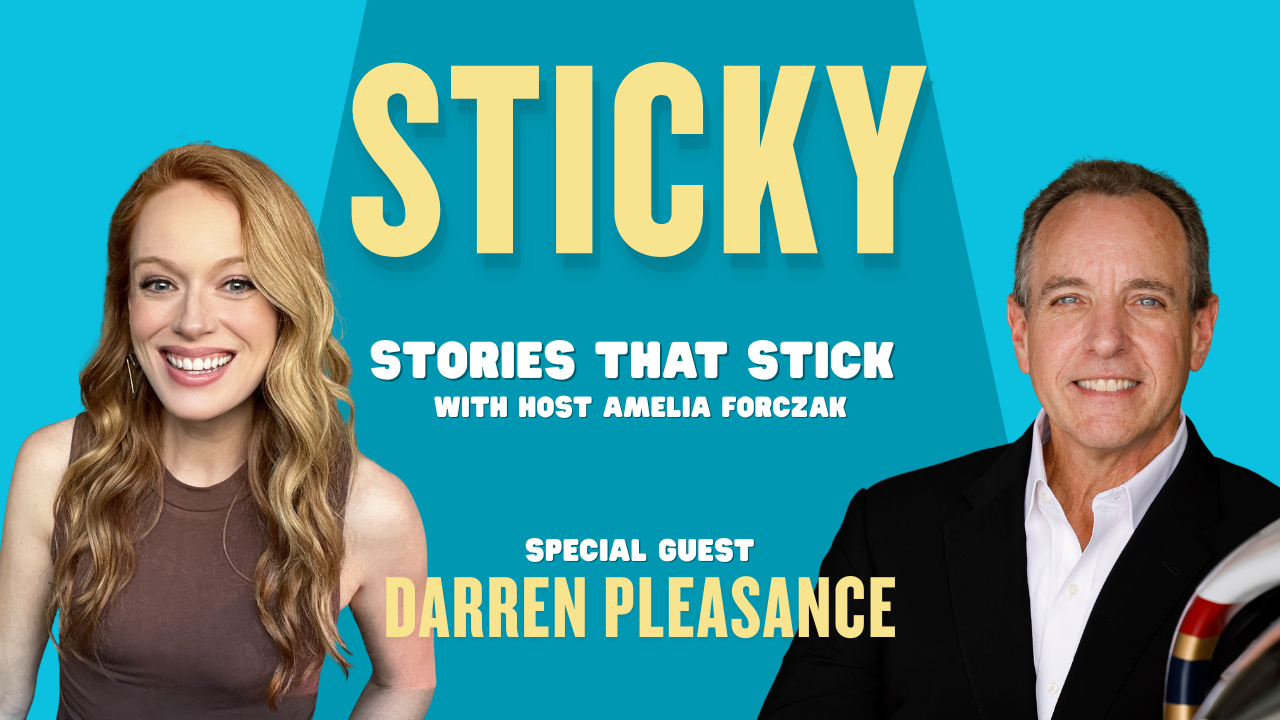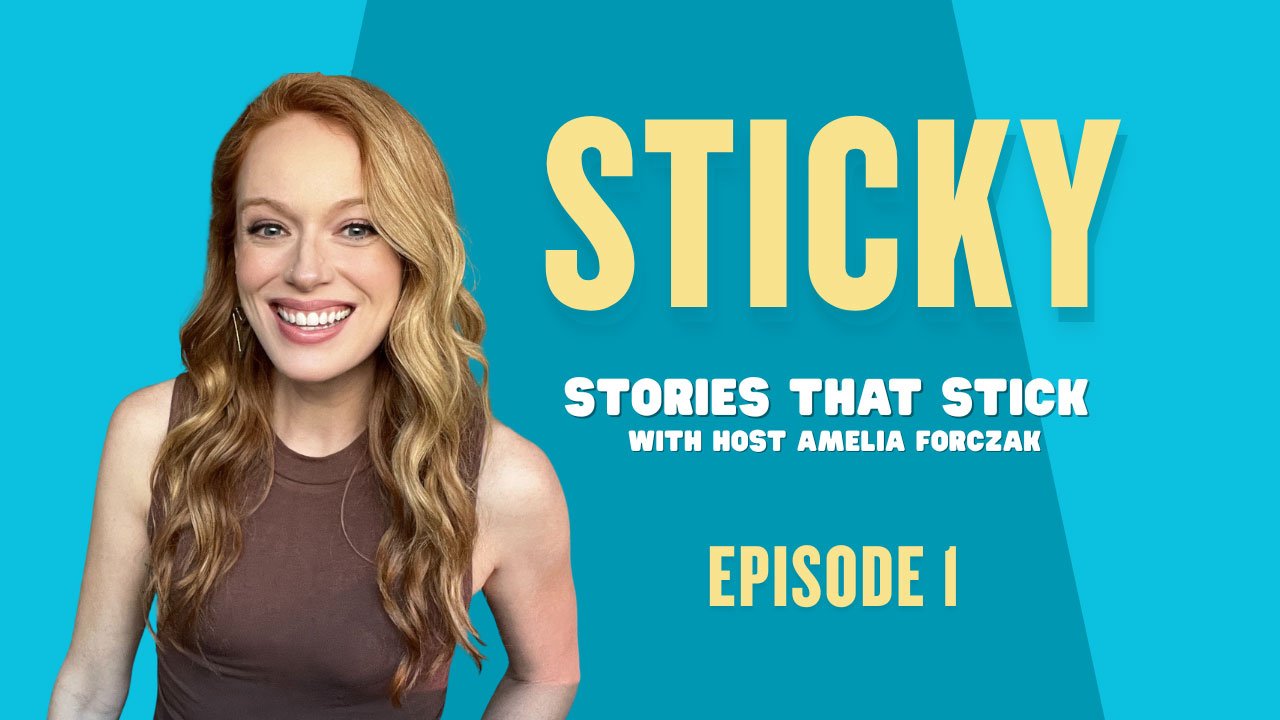

Amelia Forczak
Amelia Forczak is the Founder of Pithy Wordsmithery, a Chicago-based copywriting and branding firm that helps thought leaders, entrepreneurs, and executives articulate their ideas with clarity and impact. A New York Times bestselling ghostwriter, she brings deep expertise in brand messaging and strategic content creation. Amelia has supported clients across industries in sharing their stories authentically and is passionate about helping professionals elevate their voices, build credibility, and connect more deeply with their audiences.
Some stories linger with us for years, while others fade from memory almost instantly. What is it about certain narratives that makes them unforgettable, capable of shifting our perspectives or even changing our paths? And how can we learn to craft stories from our own experiences that have that same lasting impact?
Here’s a glimpse of what you’ll learn:
- [1:43] Amelia Forczak shares how her love of books and journalism led to a career in ghostwriting
- [2:25] The role journalism training played in shaping Amelia’s approach to nonfiction writing
- [3:03] Why Amelia focused on writing for others before co-authoring her own book
- [4:02] How stories create lasting impact and why they are more memorable than facts
- [5:43] Amelia’s personal story of being diagnosed with Irlen syndrome and embracing vulnerability
- [8:23] How challenges like dyslexia and ADHD can spark entrepreneurship and resilience
- [9:12] The importance of authenticity and vulnerability in connecting with audiences
- [10:01] How feedback and story coaching help uncover powerful personal stories
- [12:42] Why Amelia launched her podcast to showcase and dissect effective storytelling
- [17:26] Practical advice for making stories compelling by engaging emotion
In this episode…
Some stories linger with us for years, while others fade from memory almost instantly. What is it about certain narratives that makes them unforgettable, capable of shifting our perspectives or even changing our paths? And how can we learn to craft stories from our own experiences that have that same lasting impact?
Amelia Forczak, a seasoned ghostwriter, shares how she uncovered the secrets behind memorable storytelling and turned them into tools for her clients and herself. Drawing from her journalism background, Amelia explains how authenticity, emotional engagement, and vulnerability make stories “sticky” — more likely to be remembered and impactful. She reveals her own challenges with Irlen syndrome and lack of depth perception, illustrating how personal struggles, when shared honestly, forge deeper connections with audiences. Amelia emphasizes that everyone has stories worth telling, and that the emotional or entertainment value of a narrative often determines whether it will resonate. Her insights provide a framework for listeners to become more confident storytellers and to recognize the value in their own experiences.
In this episode of Sticky: Stories That Stick, Amelia Forczak, Founder of Pithy Wordsmithery and New York Times bestselling ghostwriter, is interviewed by Chad Franzen of Rise25 Media about what makes narratives resonate and how vulnerability can be a storyteller’s greatest asset. Listeners will learn why emotional connection and authenticity matter more than polish, how to identify the most powerful moments in their own lives, and practical tips for sharing stories that inspire action. Amelia and Chad explore not only the mechanics of storytelling, but also the courage required to share one’s truth — offering advice for executives, aspiring authors, and anyone who wants their message to stick.
Resources mentioned in this episode:
- Amelia Forczak – https://www.linkedin.com/in/ameliaforczak/
- Pithy Wordsmithery – https://pithywordsmithery.com
- Chad Franzen – https://www.linkedin.com/in/chadfranzen/
- Rise 25 – https://rise25.com
- Wonder Women – https://wonderwomen.hatchery.vc/
Quotable moments:
- “Stories can be 22 times more memorable than just hearing facts; it’s all about emotionally engaging your audience and making them care.”
- “Authenticity is more powerful than anything — showing up as your true self is what actually sticks with people.”
- “Whatever that struggle is, figuring out how to turn it into a strength is definitely a great sticky story.”
- “Engage emotion — that’s how you really get to people and have your message be memorable.”
- “I think everyone has a story that’s worth sharing; just be brave and start putting it out there.”
Action Steps:
- Reflect on your unique life experiences and challenges: Consider your journey to uncover meaningful stories that connect with others.
- Practice vulnerability in storytelling: Share genuine emotions and hardships to build authenticity and make stories memorable.
- Seek feedback from others or work with a story coach: Get outside perspectives to identify the most compelling details and refine your narrative.
- Focus on emotional engagement, not just facts: Highlight emotion and stakes so your stories resonate more than dry information.
- Start sharing your stories in low-stakes environments: Practice in casual settings to build confidence and improve delivery.
Transcript:
Amelia Forczak 00:12
Welcome to Sticky: Stories that stick. Join me, Amelia Forczak, as I sit down with mastery storytellers to explore what makes some narratives unforgettable. Let’s get started. Hi. I’m Amelia Forczak, the host of sticky stories that stick, where I sit down with successful executives, entrepreneurs and thought leaders to uncover the pivotal moments that shape them and explore what transforms personal experiences into stories that truly stick with audiences, whether you’re crafting your next keynote, writing a book, or simply want to connect more authentically with others, you’ll discover the psychology behind memorable storytelling and learn how to turn your own life experiences into narratives that resonate and inspire action. This episode is brought to you by pithy word smithery, a Chicago based boutique firm founded by yours truly. Amelia Forczak, I’m a New York Times bestselling ghost writer, and I love helping people write market and publish their books. Since 2011 my team and I have helped many executives and entrepreneurs turn their stories into bestsellers and their brands into thought leadership platforms. Our readership is in the hundreds of 1000s, so even if you haven’t heard of us, there’s a decent chance you’ve read something we’ve written. If you’ve ever thought about writing a book, check us out online at pithy wordsmithery.com today I have a special guest interviewer. We flipped the script, and Chad from rise 25 will be interviewing me. Welcome to the show, Chad.
01:38
Hey, thanks so much. Amelia, great to be here. Hey, I’m looking forward to finding out more about storytelling and kind of what, what makes effective storytelling and things like that. Tell me, as we get started here, when did you, when did you kind of first realize that storytelling was going to be your thing?
01:53
Amelia Forczak 01:53
You know, it’s funny. When I was a kid, I always loved books. My mom was librarian when I was growing up, and I always said I wanted to write books, and something about books and storytelling just captured me. And I went to school for journalism and ended up turning it into a career, becoming a ghost writer. So I’ve written, I think, 17 books, and I love it. I love talking with authors and hearing all kinds of just crazy, interesting things that have happened to them. So it just made me want to start a podcast that focuses on storytelling.
02:29
How much does journalism? How much journalism goes into writing books like this?
Amelia Forczak 02:34
I mean, honestly, a ton journalism, really, for this career, which I feel like a lot of people go to school for something, and they don’t end up using that degree, but it definitely taught me about about facts and how to share things. When it comes to fiction, I’m completely unprepared, like I would I’d love to do fiction someday, but that feels so foreign to me, and so I think I’ve been very just in the whole world of business, leadership, self help, memoir, but everything that’s that’s real, and so all the real stories, I feel like are just just so interesting,
03:07
before you ever helped a client write a book. Did you write your own book?
Amelia Forczak 03:12
No, I, you know, I recently wrote my own book with a co author, but I did that after writing a ton of books for other people, so I’ve always put the, like, other stories first. And it’s funny, because I was like, what would I even write a book about? I feel like I didn’t have that much life experience. You know, I did my first I started writing my first book when I was maybe 25 so in terms of nonfiction, we’re like, what do I have to tell people? So it’s been really cool working with, you know, C suite executives, who really do have a lot to tell people and just learn from them. It’s kind of almost like I’ve gotten, like, a free mini MBA from all these these people who are, you know, professors at Ivy League schools and running companies. So it’s been very interesting. So
03:13
03:52
03:52
03:52
we all have kind of our own personal stories that we like to tell other people. I have, like, stories that I think are hilarious. Sometimes I think I need to, update my material or something. But what do you think? What do you think? Maybe some personal stories stick with us for years, like me, and then some we just forget about immediately. Yeah, it’s
04:11
Amelia Forczak 04:12
interesting, right? Because some people have great memories for everything. I am not one of those people. I let things go, if they don’t, you know, really like, capture me, and I’ve just, I’ve seen research on, like, what makes things memorable, and it’s usually tied to stories. I’ve seen stats, and it’s different depending on the kind of research that you look at, but stories can be 22 times more memorable than just hearing facts. I guess that always just made me think more about what I learned in school. And it always seems like how the information was presented made such a difference in whether or not you retain it. So it’s like, you had a really good teacher, that stuff sticks with you for years and years, whereas other classes, you’re like, Did I take that class? Like, I have, like, a vague memory of sitting in the room, you know? And so working with books, I’ve really been thinking about that a lot, where the whole goal is to have that book stay with you, like for years, for decades, like you want it to be something that changes you and changes how you think. And so I don’t have all the answers for all of that. I know a lot of it does have to do with neuroscience. And so spiking certain chemicals in the brain when you hear the stories, whether it’s cortisol or dopamine. But what are the things that make you emotionally engaged in the story, make you care about the person, or make you feel like there’s some kind of risk involved, or you’re listening and you’re like, Oh, I hope this happens or it doesn’t happen. You get emotionally invested, so anything like that.
05:37
So you know, you talked about stories that maybe change the way you think or change your path. Can you share one maybe that affected you, like a story, like a story from your own life, that you know changed how you saw the world or shifted your path?
Amelia Forczak 05:51
Yeah, it’s funny, because I coach people on this all the time. They’ve been doing this for years, and I’m like, you have to be vulnerable. Like, tell me your, tell me your like, juiciest stories and and a lot of times, authors will tell me those, and then they’ll feel so, almost like shy about about it. And those are usually the best stories where I’m I’m like, pushing them to tell and so I’m like, I have to take my own medicine here. I mean, I have, I have different stories, and I think I’ve, like, presented them differently in in various contexts, but I did share this one story that I have with I did like one of those five minute TED Talk style things where they’re like, change my mind in five minutes. And sort of like my focus was, I think I can help you see the world differently, because the way that I saw the world differently when I was 17, I realized I don’t have any depth perception, and I always thought I couldn’t see that well, if I go to eye doctor and they tell me that I had 2020, vision, and then on the side, I also kind of thought that I was dyslexic, because I even though I was in like, the advanced classes in school, sometimes I was writing my letters backwards, or I’d be taking notes and it would just all come out backwards, and I’m like, what is happening? Something feels weird. And I finally got diagnosed with Irlin syndrome, which is basically like dyslexia, but it’s, it’s like visual and for a long time, I just felt so embarrassed by that. I was like, Oh, my God, how well. I don’t want anybody to know. I don’t want anyone to think I was stupid and then, but I still wanted to be a writer, and it was harder because of that, but it’s it was my interest, you know, so I just kept going with it. And then, in the beginning, I was like, what if my clients find out like and I sort of think that over the years, I’ve just come to embrace it a little bit more, and know that everybody has a struggle like that, maybe something that happened to you or something that is like, would be surprising for people, and especially the stories of resilience. Like, people love hearing things where it’s like, it actually was really hard to get here. You know, it seems so easy when you’re when you’re doing well, but the journey there, like can be difficult, and so I think any stories like that, just sharing them, can be very sticky and powerful.
05:53
08:08
Yeah, for sure. So sometimes, you know, having a weakness like that, or having to overcome that kind of an obstacle, can turn into a strength, even though you still have maybe that, that obstacle that you have to daily overcome, but you develop so many strengths in the in the course of overcoming that obstacle, can you maybe point any strengths that you’ve developed as a result of maybe having the depth perception problem or potential dyslexia?
08:09
Amelia Forczak 08:30
Yeah, I think it led me to start my own business because I wanted to be in charge of my own working environment and be able to pick the tasks that I have and be able to outsource the tasks that I’m not that good at. And I think it really just made me find entrepreneurship more appealing. I think that’s true for a lot of people who have something like that. A lot of my clients have ADHD. If you have ADHD, you’re, I think I’ve read something like 300 times more likely to start your own business or something like that. So whatever that struggle is like, figuring out how to turn it into a strength is definitely a great, sticky story.
08:33
09:09
So you have that story in your own life. How is kind of sharing that, whether in conversations or presentations or writing, affected how people connect with
Amelia Forczak 09:20
you, showing up and being vulnerable, I think is, is something that people like. And I mean now, now that everybody is their own media outlet, you’re on social all the time and and you’re trying to craft this image, authenticity is more powerful than than anything. And so if you can go into a room and show up and be confident and share who you really are, and not be scared of what people think, and not try to be the most like polished, PR ready version of yourself, but like your true self. That’s what actually sticks with people. And so I’ve just tried to do that and then coach my author clients to do the same.
09:20
09:57
So I always feel like I’m willing to be vulnerable or whatever, but I’m just not gonna, like, be vulnerable, right? When we shake hands, you know? Yeah, like, what’s kind of the process getting to that vulnerability with people?
Amelia Forczak 10:09
Yeah, it is. It is a little, it is a little tricky. I think it’s like building trust with people and then getting, getting the feedback that that story is not stupid. You should share it, you know, and and getting that third, third party objective opinion. So I think working with a story coach, or just someone else to to help you craft your story and figure out what are the interesting parts. Actually, one of my one of my friends, is great at that. She works in branding, and she helped me with my business years ago, and she told me, she’s like, your mom was a librarian. You need to be telling people that. And I like, I was like, do I and I was like, Oh, you’re right, that’s part of the story that goes in there. So I just, I think you don’t always know that the things like how the dots connect where that’s something you should tell people.
10:10
10:59
I’m guessing maybe, I mean, I don’t know, but I’m guessing maybe you can meet with somebody like, three four times to get the get the process rolling, and then then, like, the fifth meeting, or whatever, they’ll tell you something like, Why didn’t you tell me that the first time? Oh, my god, yeah. 100%
11:13
Amelia Forczak 11:14
I’m like that. We’ve just been dancing around this the whole time. Yes, I try to make people more comfortable. But yeah, it can be very emotionally, just difficult to get right to it. But at the same time, sometimes I hear all of it on a sales call. The first time I talk with an author, so I’ll talk with someone and they have an idea for a book, or it’s based on something that happened to them. And on these calls, like I never know what I’m going to get. And sometimes the stories get so deep, like I have calls from years ago, that I will never forget because of what people told me so just and that makes me more interesting about storytelling in general, too.
11:53
So maybe when somebody you’re working with finally breaks through the barrier of being vulnerable, of vulnerability, what makes that so powerful?
Amelia Forczak 12:06
I feel like it is therapeutic for them to get to that point. And it’s almost like cutting through all bullshit, right, where it’s like we just get to the heart of whatever it is, and then sort of figure out where that goes, if it’s in their book or their keynote or whatever it is. And sometimes people have, like, second thoughts about it, and a lot of it is just sort of coaching people to be brave and just start telling to start talking about it, and just seeing how people react, because the response is always positive.
12:07
12:42
So this is kind of your first edition of this podcast. What inspired you to start it?
12:47
Amelia Forczak 12:49
I talked to so many interesting people. It just made me think, how do we, how do we figure out how to share these stories with people a little bit more, and also just, not just the stories, but sort of dissect them. Why are they so interesting? A lot of the people that I’m talking with are like your keynote speaker in a big conference. They’re they’re the guest on the TV interview, so they’re expert storytellers, and they’ve spent a lot of time figuring out why certain things, like hit with their audience and don’t, and they’ve been in front of 1000s and 1000s of people, and I think we can all learn from them. So many of us are are working on our own personal brand or platform, or we’re writing blog posts or E newsletters, and it’s always the question of, how am I going to show up? What should I share? And this podcast is going to help
13:45
with that. So you’ll have guests who are like entrepreneurs, executives, thought leaders, people who share their personal stories and their work. What are you most curious to discover as you talk to them? Everybody
13:58
Amelia Forczak 13:59
has such an interesting background. So I want to know, I guess, the things that changed how they think about the world, things that happened to them that changed their career trajectory. Maybe they thought they were going to go into a certain industry, and something changed that. Maybe they had an interaction with one person that completely changed their life, anything like that, where the person was emotionally moved, I want to understand a little bit more about that, and then what we can learn from that as well. What
14:29
do you think a listener could gain? Maybe a listener is like always had in the back of their mind. A little my story is pretty cool. Like, what do you think a listener could gain from hearing some of these conversations?
14:40
Amelia Forczak 14:40
Yeah, so I mean, on top of just hearing interesting stories, but being able to hear how people tell them, because there’s a format to it. There’s different ways that you tell stories, and so just being able to become a better storyteller, and hopefully getting more confident with your own stories and understanding that you should be sharing them more, it does matter, and if anybody’s interested in expanding that into, you know, being able to make an impact with more people. I hope it inspires
15:06
them
15:06
so as people, kind of, you know, comb through their past experiences and think about which are powerful stories, of which are what’s maybe the difference between something that happened to you and something that’s a story worth sharing?
Amelia Forczak 15:20
Yeah. So it’s funny, I’m in this women’s networking dinner. Shout out to wonder women. But at the beginning of the dinner, it’s always just like, share an interesting story, entertain us. And the first time I went to I was like, Oh my God, I feel so put on the spot. How am I supposed to tell, you know, sticky, sore, sticky, interesting, fun story, and I think a lot of it is about the emotional value, or the entertainment value, and, like, just preparing for it. So I’d love to, like, just dig into that a little bit more with the guests and figure things out. But everybody has stories. It’s like the story to tell your friends over cocktails or the goofy thing that happened to you that, like every time you’re in that situation for the rest of your life, you’re gonna think about that just like silly things. So, yeah,
16:15
so you know, as you speak to an executive or an entrepreneur, you know, and they maybe feel like they need to make like, I have some really good stories, but I need to maintain a certain type of image, and they may be hesitant to tell the good stories, or be be particularly vulnerable because they don’t want to show everything. What do you say to them?
16:34
Yeah,
Amelia Forczak 16:35
they’re, I mean, they’re definitely ways to tell stories that don’t put you on the spot as much, but still resonate with people. And so I’m not I want this to be like, we have to get all the skeletons out of your closet. Like, that’s not what the podcast is about. But I think there are certain, certain ways that you can make sure your image isn’t compromised by being authentic. At the same time, I’ve seen this with executives, where sometimes everything has to be run by a PR team before they can share anything. And for those makes me kind of sad, because I feel like that’s sort of like always in the back of your head, where it’s like, can I tell this? Can I do this? Someone needs to tell me if I can do this. And it’s sort of that’s got to, like, mess with you a little bit, because it’s almost like you don’t own your stories,
17:19
which I think is sad if you want to share
17:21
17:21
your personal experiences, is there, like a storytelling technique that somebody could start using immediately to make those experiences more compelling?
17:32
I would
Amelia Forczak 17:32
say, try to engage emotion. That’s what you always hear for anything with marketing also, and so the way that you really get to people and have it be memorable is speak to their emotions and tell them why they should care.
17:48
Okay,
17:48
good stuff.
17:50
So for someone who’s listening, who has a story that they think might be worth sharing, but doesn’t know where to start, what would you tell
17:57
them? Yeah,
17:58
Amelia Forczak 17:58
I think all stories are worth sharing. By the way, I love hearing everyone’s story, but I would encourage them to just be brave and just start putting it out there. If somebody’s interested in writing a book, you can check us out online. Pit the wordsmithery, but
18:13
yeah, I think everyone has a story that’s worth sharing.
18:16
Okay, awesome. Well, hey, I’ll definitely look forward to learning from your podcast. Thanks so much for having me today. Amelia, yeah, thanks for joining So long everybody.
Thanks for listening to sticky stories that stick. We’ll see you again next time, be sure to click Subscribe to get future episodes.
Never miss a story that sticks
Subscribe to Sticky: Stories That Stick on Apple Podcasts, Spotify, or Amazon Music so every new conversation lands the moment it drops.