
Books · Video
How to Place Interviews in Your Book
September 8, 2022 · 4 min read
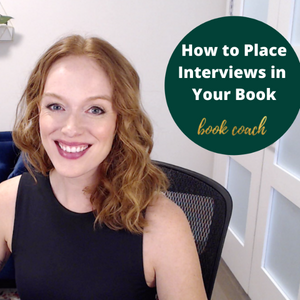
You know you want to interview people for your nonfiction book, but sometimes it feels like a chicken-or-the-egg situation. Do you write your chapter first and then interview someone to fill gaps, or do you interview people first to help inform the writing? And how do you plan for interviews you haven’t conducted yet when you don’t know exactly what people will say?
These are some of the most comment questions I get from authors during the writing process!
Watch to hear my best advice on placing interviews within your nonfiction text…as well as some best practices for interviewing!
If you need help writing, editing, or publishing your book, contact us today!
Transcript:
Hi. I’m Amelia Forczak, and I’m with Pithy Wordsmithery. And today I wanted to talk about interviewing people for your book, and how you figure out where to put those interviews. So I had a question come in from a client recently who’s doing interviews for her book, and she was kind of unsure about how you know where to put the content for interviews if you haven’t done the interviews yet. So that’s a great question, right? So when you’re writing a nonfiction book, which is usually what we’re doing, at least with my business, we’re wanting to involve people who know about the subject matter, but it gets a little bit confusing figuring out how you’re going to place that information, because you haven’t actually talked to them yet. So you might have an idea of how the interview will go. You’ll have maybe a couple questions, like, you’ve got to have a reason why you’re interviewing them in the first place, right? So maybe they’re an expert about a certain thing, and you’re planning on putting them in maybe, say, chapter five, and then you do the interview, and you’re thinking, Oh my gosh. Like they’re perfect for chapter eight. What do you do at that point? Right? So my best advice, I think, is to try not to keep redoing chapters that are already done. So if chapter eight is already done and you are happy with it, and you’re getting this interview, and you’re trying to figure out where to put it, ideally you want to put it, not in chapter eight, because chapter eight is Chapter Eight is already done. So if you are able to put it in another chapter, that’s generally like a better way to do it. So if you think about the book as being like a puzzle, and you’re sort of like fitting things in, they can go in different places. You don’t want to undo your work. So if you really think that it needs to go in that chapter, then maybe it’d be worth redoing some things. But most of the time you can, sort of like position stories in different ways, and content can be sort of a little bit more modular. So if you’re, you know, thinking that it was going to go in a certain chapter, and the interview goes a different way, try to bring it back on track, to see if it can fit in the fit in the original Chapter or a Chapter that hasn’t been written yet. That’s just like a better way to stay, you know, keep it moving and not redo work, and instead, just keep doing fresh content. So that’s my best advice. And then with interviewing people, I always like try to keep it kind of fluid, too. So I wouldn’t really like plan out all the questions in advance. I would kind of like have a couple questions up my sleeve and then see how it goes from there, so that if they do end up giving you interesting content that you weren’t expecting, you can kind of roll with that and then get the like, get the most juicy details out of them. But I think it’s better to kind of like go with the flow, instead of just having the questions planned out. And I also would not have the same questions planned out for everyone for the book. Sometimes I’ve worked with authors where they interview a bunch of people and they ask every person the same question. And I think generally, that just does not lead to getting really unique answers, you might get really good quality answers on the same topics, and then it’s kind of like you don’t really need all those answers in the book. Maybe one story is good enough to prove that point. So if you do try to switch the questions up and talk to people about different things, that’s where you’re going to get the best content from your interviews. So hopefully that was helpful. Again, this is Amelia Forczak from Pithy Wordsmithery.
Get more posts like this one
Practical notes on ghostwriting, storytelling, and building an author platform — delivered straight to your inbox.
- New posts delivered to your inbox
- Behind-the-scenes on real book projects
- First access to workshops and courses
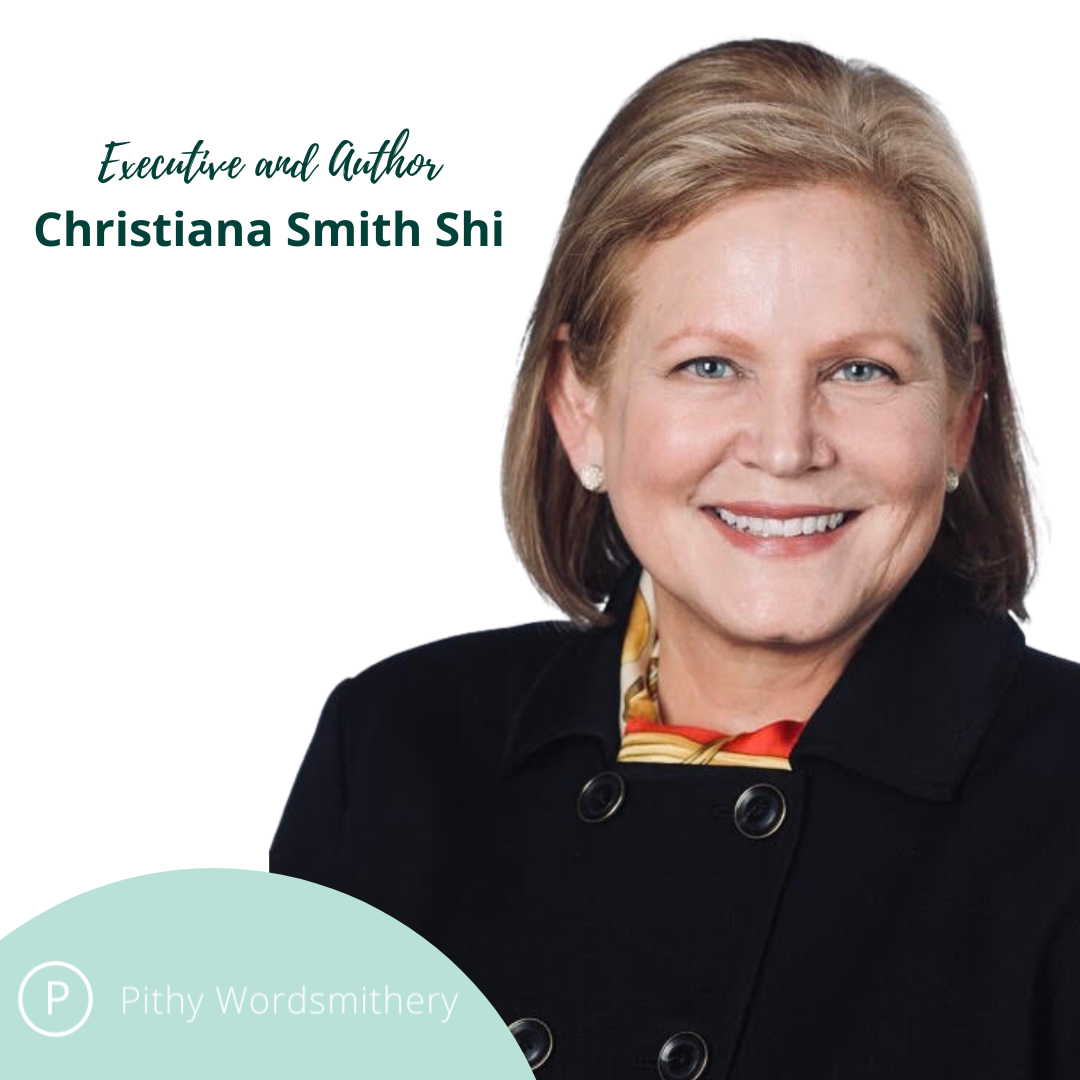
Q&A with Executive and Author, Christiana Smith Shi
As a Pithy insider, you already know the very exciting news that our dear friend and client, Christiana Smith Shi, has recently signed a book deal! Christiana and her co-author, Grace Puma, just secured the deal with Scribner & Sons—and it’s an absolute must-read for women leaders! We sat down with Christiana to learn…
Read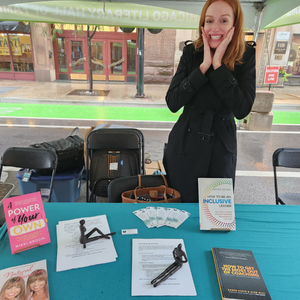
Pithy at Printer’s Row Lit Fest 2022!
The nice thing about rain is that it always stops…eventually. -A.A. Milne Yes, it was an absolute downpour at this year’s Printer’s Row Lit Fest – but that didn’t stop Pithy Wordsmithery from having a great time! Amelia spent the day meeting writers, book lovers, and aspiring authors and despite the deluge, it was…
Read